






Sewer Line Repair & Replacement
Camera Inspection First · Spot Repair or Full Replacement · Permits Handled
Our Approach to Sewer Line Repair & Replacement
How a Septic System Works
- House drain — wastewater leaves the home
- Septic tank — solids settle, scum floats, liquid separates
- Distribution box — splits flow evenly to each trench
- Leach field — perforated pipe in a gravel trench
- Soil absorption — treated effluent filters into the ground
Sewage backing up through a basement floor drain usually means the main line between your house and the street has failed. J&R Mechanical Services diagnoses with a camera, repairs what is broken, and replaces only when replacement is the honest answer.
The sewer lateral carries everything from your house to the municipal main or septic tank. In many older neighborhoods, laterals are original clay or cast iron and are nearing end of life.
Tree roots find the joints in clay pipe, cast iron rusts until the bottom of the pipe is gone, and frost heave shifts sections out of line. The result: a line that clogs every few months until it collapses.
We start every sewer call with a camera, not a shovel. Seeing the break, its depth, and distance from the house tells us whether a cleaning, a spot repair, or full replacement is right. We show you the footage.
Sewer work typically involves plumbing permits, a qualified plumber for the connection, and a street-opening permit near the main. We handle paperwork, coordinate with the local permitting office, and restore your lawn or driveway. Active backups are an emergency call.
How Do I Know If My Sewer Line Is Broken?
The tell-tale sign is the lowest drain in the house backing up when water runs elsewhere — flush an upstairs toilet and the basement floor drain gurgles. Several slow drains at once and sewer odors also point to the lateral.
Outside, watch for a strip of lawn that stays soggy or unusually green, a sunken patch over the pipe run, or foundation cracks near where the line exits the house. A camera inspection confirms it in under an hour.
Can a Sewer Line Be Repaired Without Digging Up the Yard?
Sometimes. If the pipe is intact but root-choked, hydro-jetting or a root-cutting head restores flow without excavation. If there is one break or offset joint, a spot repair opens a single small hole rather than a trench.
A collapsed section, a bellied pipe holding water, or cast iron rotted through needs replacement. Trenchless lining or pipe bursting can avoid a full trench in some cases; depth, bends, and the host pipe condition decide whether they are options.
What Moves the Cost of Sewer Line Repair?
Sewer work has one of the widest cost ranges in plumbing, driven by depth, the length of the run, and whether the trench crosses a driveway, sidewalk, or street. Laterals often sit several feet down to stay below frost, so excavation is a bigger part of the job than the pipe itself.
Ground conditions matter too — bedrock close to the surface can turn a day of digging into two. Every sewer job gets a written quote after the camera inspection, before any excavation starts.
What Happens During a Sewer Line Replacement?
Day one is locating: utility locate marks, a camera and locator to trace the pipe path and depth, and permits filed. We tell you how long you will be without drains and schedule around it.
Excavation, new PVC pipe, and a new cleanout at the house take one to three days depending on depth and length. The inspector sees it before backfill; then we backfill, compact, and restore lawn, driveway, or sidewalk as quoted.
What Should I Do While You Are on the Way?
Stop running water — every flush and laundry load ends up on the basement floor. Keep people and pets out of standing sewage, use a floor-drain plug or backwater valve if you have one, and photograph damage for insurance.
Find your cleanout if you know where it is — usually a capped pipe in the basement near the foundation wall or outside close to the house. Clearing a path to it saves the crew time you are paying for.
Sewer Line Materials, Failure Modes, and Repair Options
The pipe between a house and the street or septic tank fails for very different reasons depending on what it is made of and when it was installed. This guide covers the materials most likely to be in the ground under an older Maine home, how tree roots actually get into a sewer line, the difference between trenchless repair and excavation, and why frost depth matters for anything buried in Maine soil.
None of this is guesswork once a camera has been down the line. The material, the joint spacing, and the exact location of a break are all visible on the footage, which is what turns a repair decision from a guess into a plan.
Sewer Pipe Materials by Era
Unlike supply pipe, sewer laterals are rarely upgraded until they fail, so a home's original sewer material often stays in the ground for the life of the house.
The rough age of a house is usually the best clue to what is buried in the yard, since laterals were rarely swapped out unless something forced the issue. A camera run down the line confirms the material and condition in under an hour, which is why that inspection typically comes before any decision about cleaning, spot repair, or replacement rather than after.
| Material | Common era | How it typically fails |
|---|---|---|
| Orangeburg (bituminized fiber) | 1860s-1970s, most common in postwar (1940s-1960s) construction | Made of wood pulp and pitch; delaminates in layers and can lose its round shape under soil pressure. Rated for about 50 years under ideal conditions but has failed in as little as 10 |
| Clay (vitrified clay pipe) | Late 1800s-1970s | Installed in short jointed sections, and tree roots grow into the joints seeking moisture, eventually cracking or blocking the pipe |
| Cast iron | 1900s-1970s | Corrodes from the inside, building up rough deposits that catch debris; can eventually rust through, especially along the bottom of the pipe |
| PVC | 1970s-present | Rigid and root-resistant at properly sealed joints; failures are usually from a bad original connection, ground movement, or improper bedding rather than the pipe material itself |
How Root Intrusion Actually Happens
Tree and shrub roots do not break a solid pipe on their own. They enter through an existing joint, hairline crack, or connection that already has a small gap, drawn by the moisture and nutrients inside a sewer line. Once inside, a root thickens over time, widening the opening it came through and eventually catching paper and waste until the line clogs or the joint fails outright. Older jointed materials, clay and Orangeburg in particular, are more vulnerable simply because they have more joints and are more prone to the small gaps roots exploit.
Cutting the roots out with a mechanical cutting head restores flow, but it does not close the opening the roots grew through, so regrowth into the same spot within a season or two is common. That is why a line with a recurring root problem in the same location usually points toward a permanent fix at that joint, whether that is a lining, a spot repair, or replacing the affected section, rather than another round of cutting.
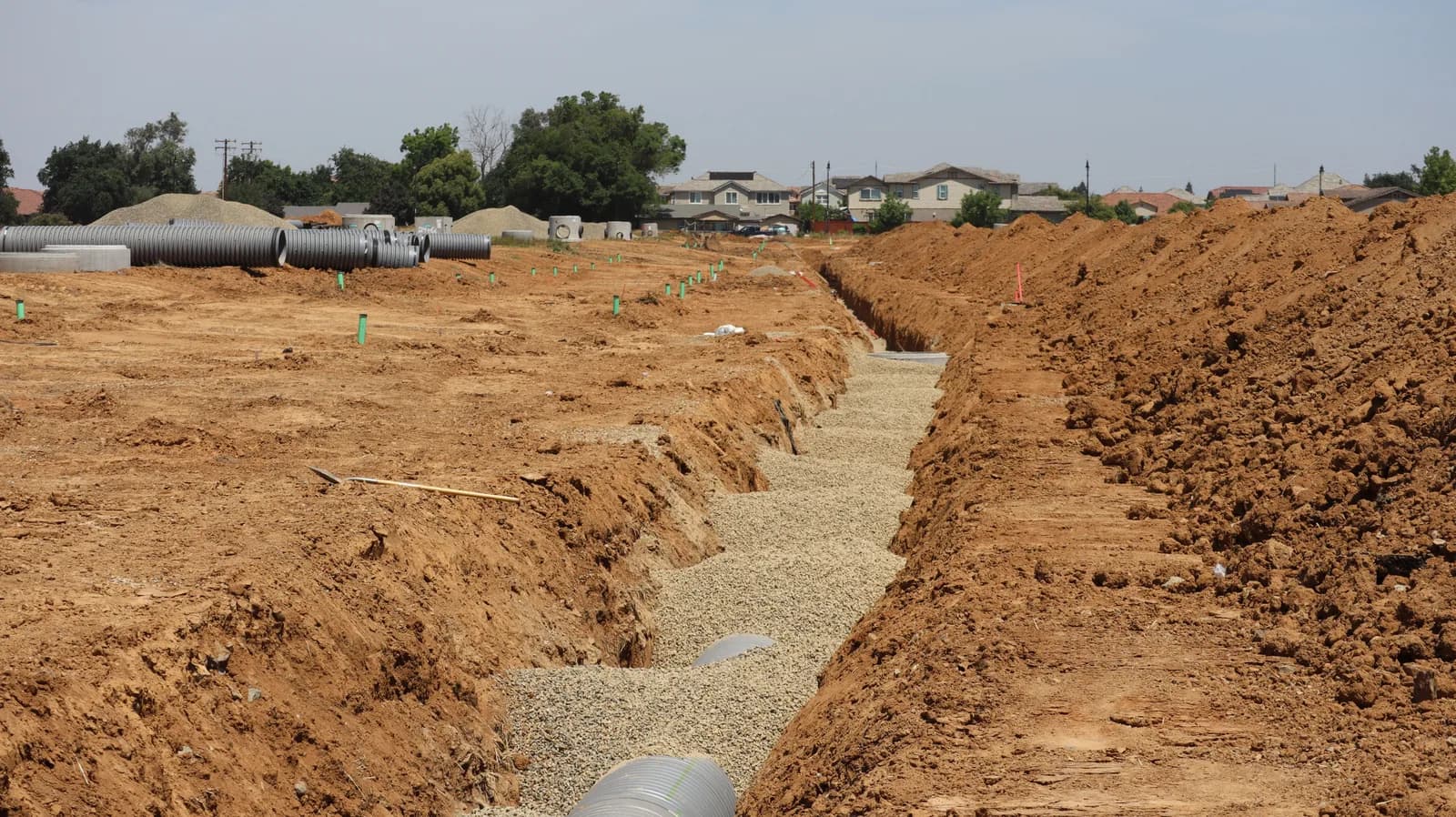
Trenchless Repair vs. Excavation
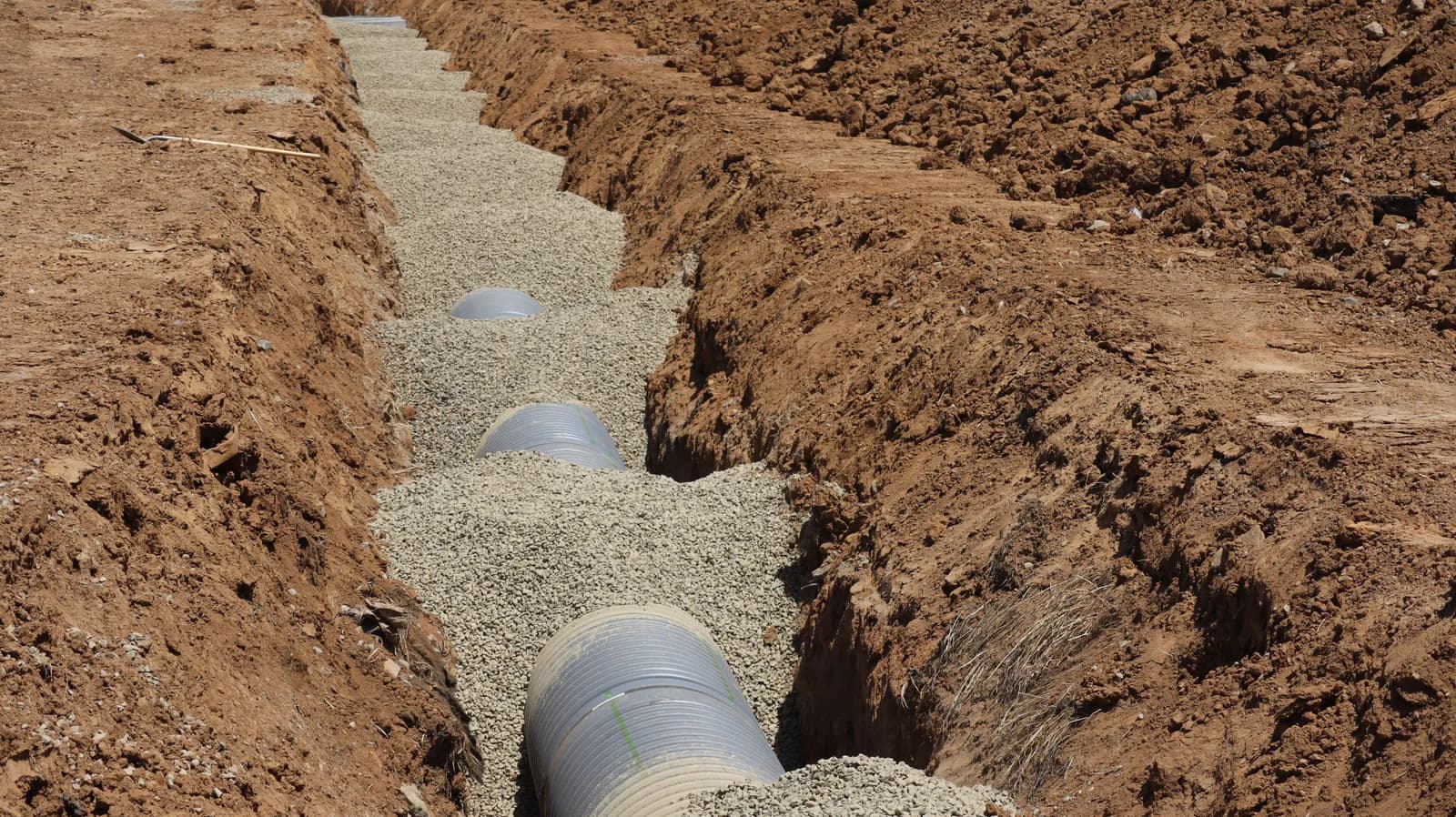
Trenchless methods can replace or rebuild a sewer line through small access pits instead of a full trench, but each one only works under the right conditions. Choosing between them, or ruling both out in favor of excavation, comes down to the pipe's shape, its material, and how much room a crew has to work with on the property.
| Method | How it works | Best suited for | Not suitable for |
|---|---|---|---|
| Cured-in-place lining (CIPP) | A resin-saturated liner is pulled into the existing pipe, inflated against the walls, and cured with hot water, steam, or UV light into a new pipe within the old one | Pipe with intact joints that still holds its original round shape, once protruding laterals are cut back | A collapsed section, a pipe that has lost its shape, or one with a belly holding standing water |
| Pipe bursting | A bursting head is pulled through the old pipe from one access pit to another, breaking the old pipe outward while pulling new pipe into place behind it | A pipe that needs full replacement where trenching the whole run is impractical, such as under a driveway or mature landscaping | Runs without room for launching and receiving pits at each end, or pipe with tight bends the bursting head cannot follow |
| Open excavation | The old pipe is dug up and replaced in a trench, then backfilled and the surface restored | A pipe that is severely deteriorated, badly out of grade, or where trenchless equipment cannot be positioned | Not a limitation so much as a bigger job: more surface disruption and typically more restoration work afterward |
Why Frost Depth Matters in Maine
Water and sewage pipes are buried below the frost line specifically so the ground around them does not freeze, shift, and damage the pipe. Frost depth across the contiguous United States ranges from near zero in the warmest regions to several feet in the coldest, and Maine sits toward the deeper end of that range most winters. That is a major reason sewer and water line excavation in Maine runs several feet deep even for a straightforward repair, and why a repair that looks simple on paper often involves more digging than homeowners expect.
Frost affects winter sewer work in a second way, beyond how deep the lateral itself sits. The top layer of ground can freeze solid enough that it has to be broken through before a crew can even reach the softer soil underneath, which is one reason excavation quotes done in a Maine winter sometimes carry a different timeline than the same job in spring or fall. Trenchless methods that only need a small pit at each end, rather than a full open trench, are often less affected by frozen topsoil than a full excavation is.
This is one reason a spring or fall sewer repair in Maine is often more straightforward than the same job in the middle of winter, and it is a fair question to raise when comparing quotes or scheduling non-emergency work.
If a sewer repair must stay shallower than the frost line for some reason, insulation or heat tape can substitute, but it costs more and is normally a last resort rather than a first choice.
Local & Independent
J&R Mechanical Services is an independent contractor — not a national franchise. Our technicians are not commissioned salespeople. We do the work you called us for, do it right, and earn the next call.
More Residential Plumbing Services
Serving Augusta & Brunswick
Sewer Line Repair & Replacement FAQs
Who is responsible for the sewer line — me or the municipality?
In most towns, the homeowner owns and maintains the lateral from the house all the way to the connection at the municipal main, including the section under the sidewalk and street. The municipality is responsible for the main itself. Check your local sewer ordinance for the exact boundary; we can help you read it.
Does homeowners insurance cover sewer line replacement?
Usually not under a standard policy. Some insurers offer a service-line endorsement for a small annual premium that covers the lateral, and some cover the resulting water damage but not the pipe. Call your agent before the work starts, and ask us for the camera footage — insurers often want it.
How long does a sewer line replacement take?
Most full replacements take one to three days from the first shovel to backfill, plus a day or two beforehand for utility locates and permits. Spot repairs are often finished in a single day. You will be without drains for part of that time; we tell you exactly when before we start.
Do I need a permit to replace a sewer line?
Yes. Sewer lateral work requires a plumbing permit and an inspection before backfill, and work in a street or sidewalk needs a street-opening permit. The connection itself must be made by a qualified plumber. We pull every permit and schedule the inspections.
Can tree roots really break a sewer pipe?
Yes. Roots enter at the joints of clay pipe seeking water, then grow until they crack the pipe or fill it completely. Cutting the roots restores flow for a season or two; the permanent fix is replacing the joint they enter through or the whole run.
Is trenchless sewer repair available?
It depends on the pipe. Cured-in-place lining needs a host pipe that still holds its shape; pipe bursting needs room to pull a new pipe through and access pits at each end. Collapsed sections, bellies, and multiple bends often rule them out. The camera inspection tells us, and we quote both ways when both are possible.
More Ways We Can Help
Google ReviewsServices
30We provide complete HVAC and plumbing service, including…
Service Areas
9Our primary service areas are Augusta and Brunswick, along with…
Company
5Connect with our team via…
Get a Quote
Request Service
Fill out the form below to request an estimate or schedule service.
“*” indicates required fields
Need it today?Call (207) 902-8899