






Furnace Maintenance
Filter Replacement · Safety Inspection · Efficiency Check
Our Approach to Furnace Maintenance
How a Furnace Works
- Return air — pulled in through the filter
- Blower — pushes air across the heat exchanger
- Burners — ignite to heat the exchanger
- Heat exchanger — transfers heat without mixing combustion gases
- Supply air — warm air delivered to the home
Regular furnace maintenance is the best way to prevent unexpected breakdowns and keep your heating bills in check. J&R Mechanical Services provides thorough annual tune-ups that keep your furnace running safely and efficiently.
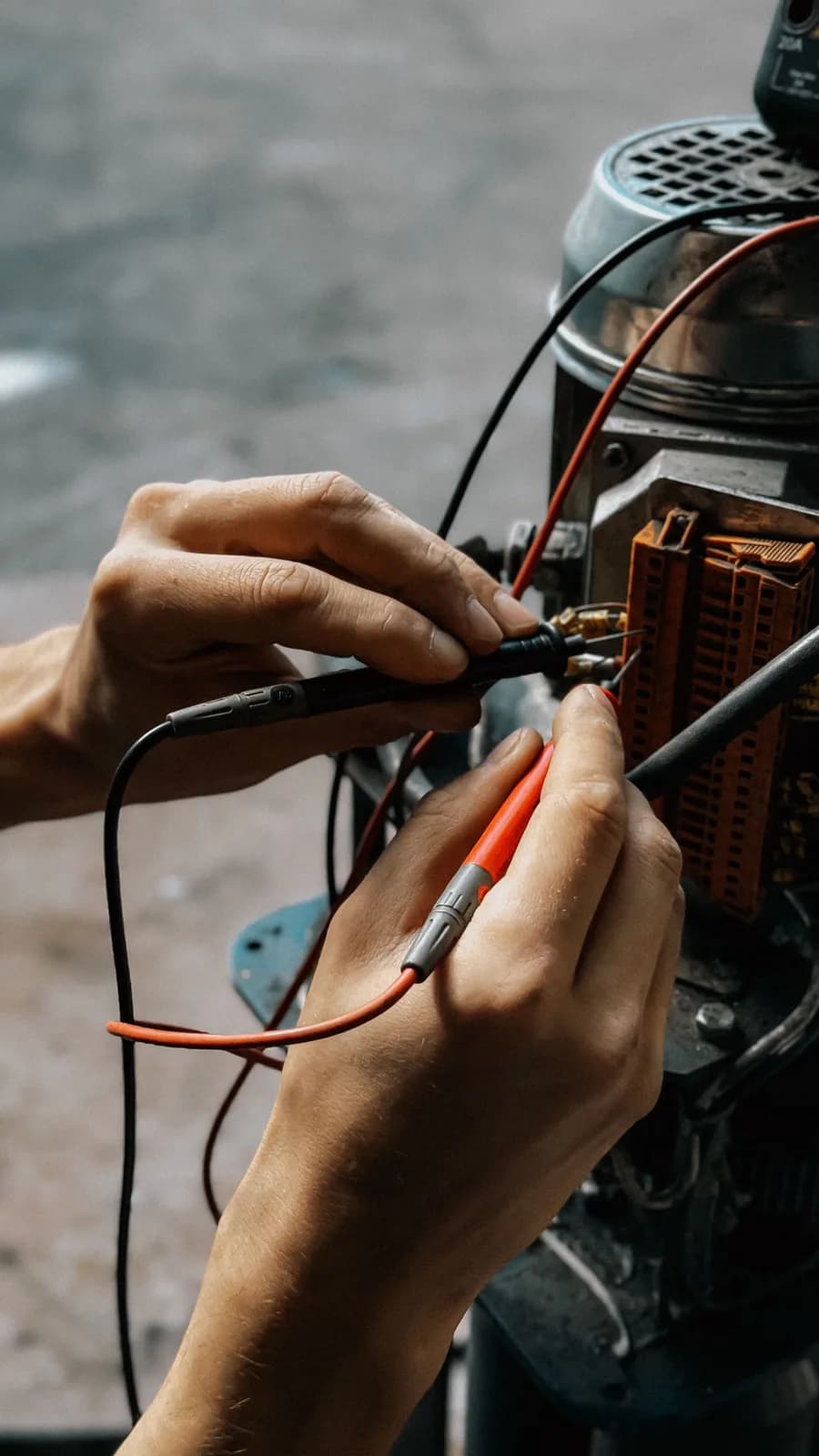
Our furnace maintenance service includes filter replacement, burner cleaning and inspection, heat exchanger inspection, safety control testing, blower motor lubrication, thermostat calibration, and a complete combustion analysis.
A cracked heat exchanger is one of the most serious furnace safety issues — it can allow carbon monoxide to enter your living space. Our maintenance inspection includes a careful check for this and all other safety concerns. We also recommend having your boiler maintained at the same time if your home has both systems.
Schedule your furnace tune-up in early fall before the heating season. Catching small issues early prevents mid-winter breakdowns and keeps your system running at peak efficiency all season long. Contact us to book your annual tune-up.
What Does a Furnace Tune-Up Actually Cover?
Our tune-up works the whole system, not just the burner: fresh filter, burner cleaning and inspection, heat exchanger inspection for cracks and corrosion, flame sensor and ignitor cleaning, blower assembly cleaning and lubrication, combustion analysis with instruments to verify efficiency and CO, safety-limit and control testing, venting and draft check, thermostat calibration, and — on oil furnaces — a new nozzle and oil filter with the burner tuned to spec afterward.
The heat exchanger inspection is the part that matters most and gets skipped most. A cracked exchanger can pass carbon monoxide into the air your blower distributes through every room, and it is invisible unless someone actually looks. Someone on our crew actually looks, every visit.
Is an Annual Furnace Tune-Up Worth It?
An annual tune-up keeps the manufacturer’s warranty valid (most require documented annual service), recovers efficiency lost to dirt and drift on every gallon or therm you burn, and extends equipment life by years. It is also the kind of insurance you cannot price until you have lived through a no-heat night.
A promise, because sales-driven "tune-up specials" have taught many homeowners to expect an upsell ambush: our maintenance visit is a maintenance visit. Our techs have no upsell quota, and a healthy furnace gets reported as a healthy furnace. If we find something real, you get the finding, the honest urgency level, and the decision is yours.
Filter Ratings, Gas vs. Oil Tune-Ups, and Where CO Detectors Belong
Two parts of furnace maintenance rarely get explained clearly: what the MERV number on a filter box actually measures, and how a proper tune-up differs between a gas furnace and an oil furnace. A third topic belongs alongside both, since any home with a fuel-burning furnace should have it covered correctly — carbon monoxide detection.
This guide covers all three: a real filter comparison, what gas and oil tune-ups each specifically involve, and CO detector placement under both Maine law and general safety guidance.
MERV Ratings: What the Number Actually Measures
MERV (Minimum Efficiency Reporting Value) comes from ASHRAE Standard 52.2, the test method that rates general-ventilation air-cleaning devices by how well they remove particles of specific sizes — not by brand claims or marketing language. The EPA recommends choosing a filter rated MERV 13 or higher where a system can accommodate it, noting that filters rated MERV 13 and above are required to demonstrate at least 50% removal efficiency for the smallest particles tested under that standard.
Higher isn't automatically better for every furnace, though. A filter's MERV rating and the static pressure it adds to the system are linked — a point covered in more depth on this site's furnace installation page — so the right MERV for a given furnace also depends on the filter rack it's installed in.
| MERV range | What it generally captures | Typical residential use |
|---|---|---|
| MERV 1–4 | Coarse particles only — dust, carpet fibers, pollen | Basic disposable fiberglass filters; minimal filtration, low resistance |
| MERV 5–8 | Mold spores, dust mite debris, pet dander | Common pleated filters in older or budget furnace setups |
| MERV 9–12 | Finer dust, lead dust, auto emissions particles | Mid-tier residential pleated filters |
| MERV 13–16 | Bacteria, most smoke, and particles down to about 0.3 microns | EPA's recommended range where the furnace and filter rack can support it |
| MERV 17–20 (HEPA-level) | Virtually all airborne particles | Not typical for a standard residential furnace filter rack — the pressure drop is usually too high without a dedicated deep-media system |
How Often to Actually Change It
Change frequency depends more on filter type than on the calendar. A thin, 1-inch fiberglass or pleated filter loads up faster and generally needs checking monthly during the heating season, with a change roughly every one to three months depending on the rating. A deeper 4-to-5-inch media cabinet filter has far more surface area to load particles onto before it restricts airflow, and manufacturers of that format commonly rate them for six to twelve months between changes.
Pets, dust from renovation work, a home with more foot traffic, and simply running the furnace more in a cold winter all shorten that interval. The EPA's general guidance is straightforward: check filters regularly and replace them as needed rather than on a fixed schedule alone, since a visibly gray or clogged filter is already restricting airflow before a calendar reminder would tell you to change it.
What an Annual Tune-Up Covers — Gas vs. Oil
A gas furnace and an oil furnace share plenty of maintenance items — filter, blower, safety controls, heat exchanger inspection — but the combustion side of the service is genuinely different equipment and genuinely different failure modes.
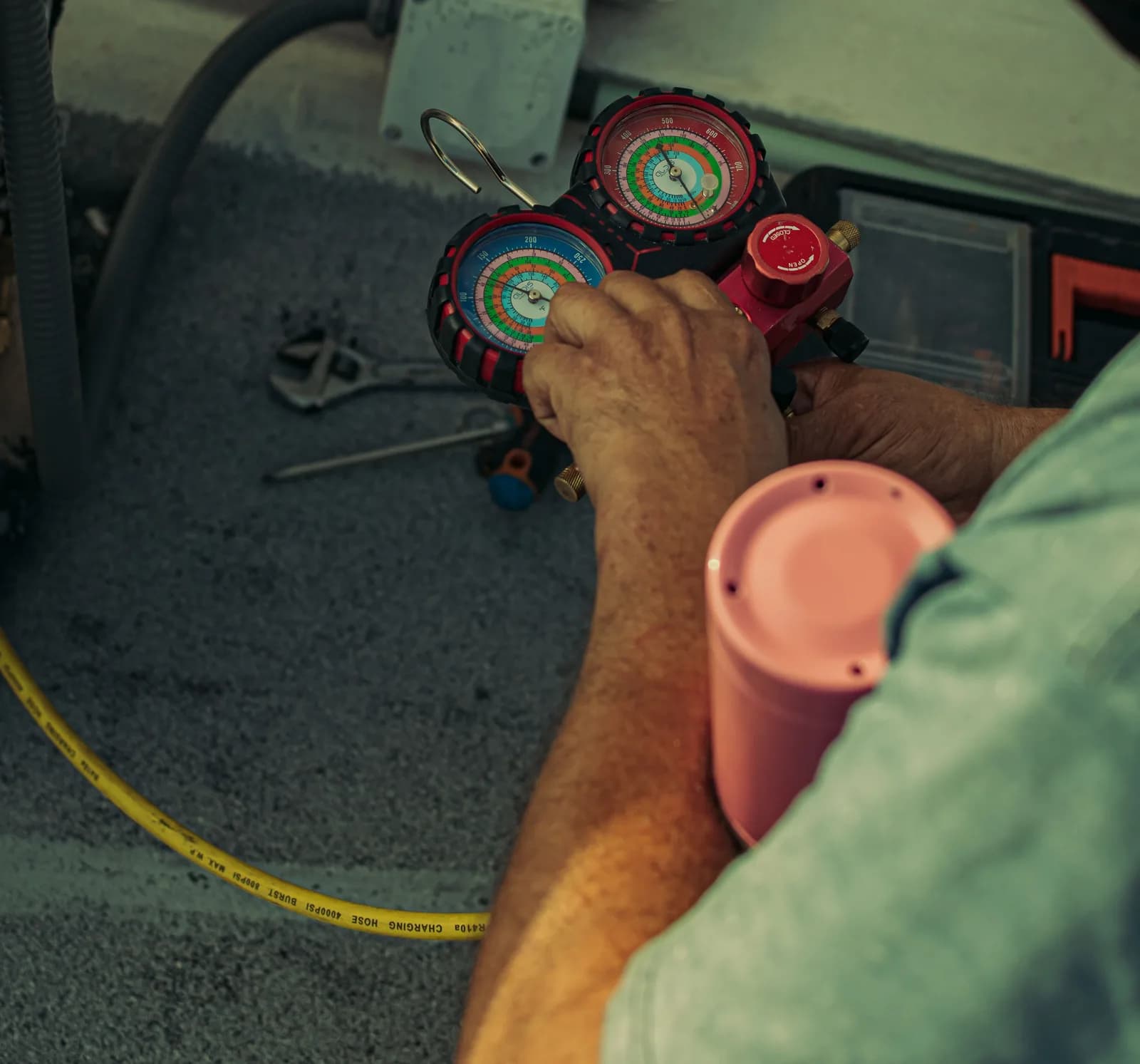
Combustion analysis with a calibrated analyzer is the common thread on both fuels: it measures carbon monoxide output and combustion efficiency directly, rather than assuming a furnace is burning cleanly because it sounds fine. Oil systems need more of that attention more often. The National Oilheat Research Alliance (NORA), the industry's technical and training body for liquid-fuel heating, organizes its service training around exactly this combustion-focused work — nozzle and chamber condition, draft and venting, and documented service procedures — because an oil burner's spray pattern degrades with nozzle wear and its combustion chamber accumulates soot in a way a gas burner simply doesn't.
- Gas furnace tune-up: burner and ignition inspection, combustion analysis for CO and efficiency, gas manifold pressure check, heat exchanger inspection, blower and safety-control check
- Oil furnace tune-up: nozzle replacement, oil filter change, electrode and ignition inspection, combustion analysis including a draft and smoke/soot check, heat exchanger and chamber inspection, blower and safety-control check
J&R's gas furnace tune-up is $219 and oil furnace tune-up is $289 — the oil service runs longer because of the added nozzle, filter, and combustion work oil equipment needs every year.
Carbon Monoxide Detector Placement
Maine law (25 M.R.S. §2468) requires a carbon monoxide detector in each area within, or giving access to, bedrooms in the residential occupancies it covers, positioned according to the manufacturer's instructions for that detector. Depending on the type of building, the law also requires a dual power source — tied to the building's electrical service with battery backup, or a detector using a sealed, non-replaceable 10-year battery.
The U.S. Consumer Product Safety Commission's general guidance goes further than the legal minimum: install a CO alarm on every level of the home and outside every sleeping area, not just near bedrooms in a single part of the house, and use interconnected alarms where possible so that one sounding triggers all of them. Combining the two — the legal placement near bedrooms and CPSC's every-level guidance — covers a house more completely than either one alone.
If a CO alarm sounds, get everyone out of the house immediately and call 911 from outside. Don't go back in to find the source, and don't dismiss ongoing headaches, dizziness, or nausea in a home with fuel-burning equipment as unrelated.
Sources: ASHRAE — Standard 52.2, Method of Testing General Ventilation Air-Cleaning Devices for Removal Efficiency by Particle Size · EPA — Guide to Air Cleaners in the Home (MERV 13+ recommendation and removal-efficiency requirement) · NORA (National Oilheat Research Alliance) — Technical Resources / Learning Center (service procedures, combustion, draft & venting, nozzles & chambers) · ENERGY STAR — Furnaces product page · Maine Revised Statutes, Title 25 §2468 — Carbon monoxide detectors · U.S. Consumer Product Safety Commission — Carbon Monoxide Information Center
Local & Independent
J&R Mechanical Services is an independent contractor — not a national franchise. Our technicians are not commissioned salespeople. We do the work you called us for, do it right, and earn the next call.
More Furnace Repair & Installation Services
Serving Augusta & Brunswick
Furnace Maintenance FAQs
How often should a furnace be serviced?
Once a year — ideally in late summer or early fall before the heating season. Oil furnaces especially should never skip a year, since soot buildup and nozzle wear steadily degrade efficiency and reliability.
How often should I change my furnace filter?
Check monthly during heating season and replace every one to three months depending on filter type, pets, and dust. A clogged filter is the single most common cause of furnace short-cycling and overheat shutdowns we see.
What happens if I skip furnace maintenance?
Efficiency drops as dirt accumulates, small failures go unnoticed until they strand you without heat, manufacturer warranty coverage can lapse, and safety issues — cracked heat exchangers, venting problems, CO — go undetected. Skipping maintenance does not save money; it defers it with interest.
Will you inspect for carbon monoxide?
Yes. Every tune-up includes a heat exchanger inspection and a combustion analysis that measures CO directly. We also recommend every home with fuel-burning equipment keep working CO detectors on each level.
More Ways We Can Help
Google ReviewsCompany
5Connect with our team via…
Services
30We provide complete HVAC and plumbing service, including…
Service Areas
9We cover Kennebec and Cumberland County, including…
Get a Quote
Request Service
Fill out the form below to request an estimate or schedule service.
“*” indicates required fields
Need it today?Call (207) 902-8899