







Boiler Repair
Accurate Diagnostics · Oil, Gas & Propane · Safety-First Approach
Our Approach to Boiler Repair
How a Boiler Works
- Burner — ignites fuel to heat the exchanger
- Heat exchanger — heats the water circulating in the loop
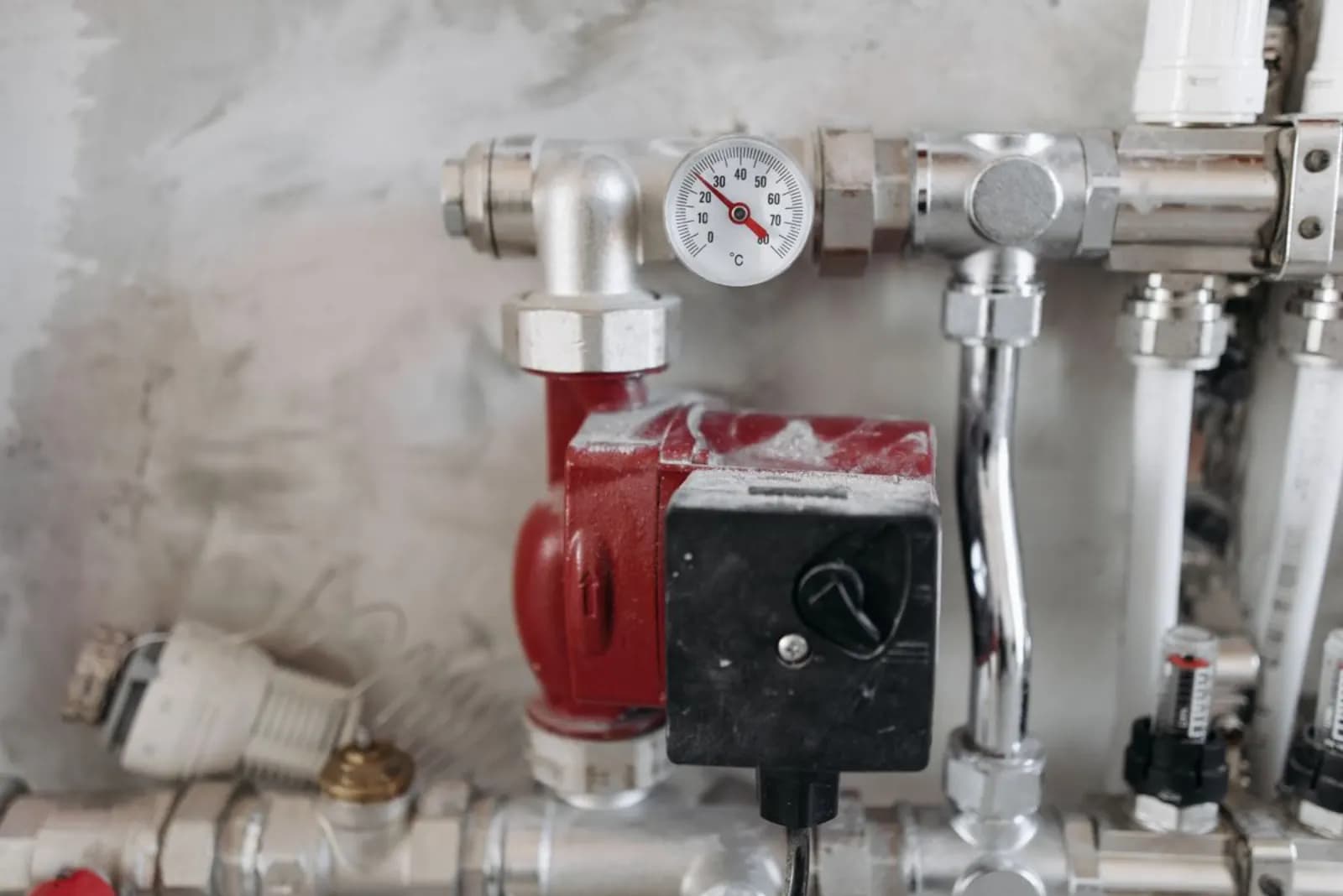
- Circulator pump — pushes hot water through the loop
- Expansion tank — absorbs pressure as water heats and expands
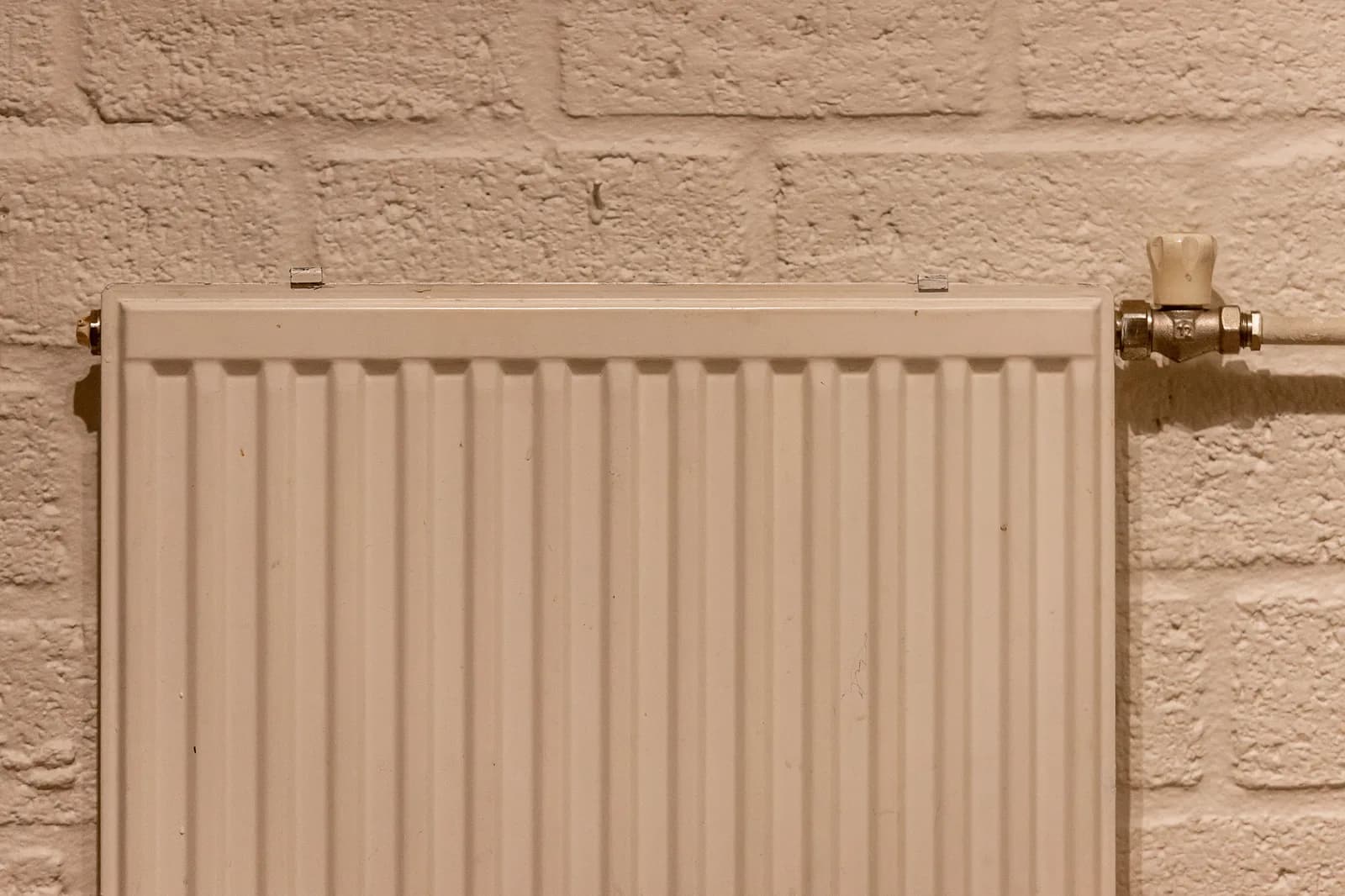
- Baseboard loop — hot water out, cooler water returns
When your boiler breaks down in the middle of winter, you need it fixed fast and fixed right. J&R Mechanical Services provides expert boiler diagnostics and repair with a focus on safety and accuracy.
Common boiler issues include no heat, low pressure, strange noises, leaking, short-cycling, and thermostat problems. Our technicians diagnose the root cause accurately so you are not paying for repeat visits or unnecessary parts. If your boiler leak has caused water damage, our leak repair team can help address that as well.
We repair oil, propane, and natural gas boilers from all major manufacturers. Whether it is a faulty circulator pump, a failed zone valve, a cracked heat exchanger, or a control board issue, we have the experience to handle it.
Safety is always our first priority with boiler repairs. We test all safety controls, check for proper combustion, and verify carbon monoxide levels before clearing a system for operation. If your boiler is beyond repair, we offer professional boiler replacement with honest guidance on the best option for your home.
What Your Boiler Symptoms Usually Mean
No heat at all most often traces to ignition or fuel delivery — a failed oil primary control, a clogged nozzle or filter, an empty tank, or a tripped safety that is telling you something. Banging or rumbling ("kettling") points to scale on the heat exchanger or air in the system. Pressure that keeps dropping means a leak somewhere in the loop or a waterlogged expansion tank; pressure that climbs too high suggests a failing fill valve or expansion tank. One cold zone with the rest of the house warm is usually a stuck zone valve or a dead circulator pump.
Water on the floor deserves a prompt call: it may be as simple as a relief-valve or fitting drip, but a leak from the boiler block itself usually means the heat exchanger is done. We tell you which one you have before anything is replaced, and if the water has already spread, our plumbing team can handle the collateral damage in the same visit.
When Is a Boiler Worth Repairing?
Circulators, zone valves, aquastats, ignition parts, relief valves, expansion tanks — all standard repairs that make sense at nearly any boiler age. The calculus changes when an older boiler needs a major component, or when the block itself is leaking: at that point money spent on repair is usually better applied to a high-efficiency replacement that cuts fuel use every month.
You will get that recommendation straight. Our technicians earn nothing extra by steering you to a new boiler, and our plumbers and technicians handle every job. We fix what should be fixed, replace what should be replaced, and show you the numbers behind either answer.
Boiler Error Codes and Lockouts by Brand
Modern boiler and burner controls display a code, a name, or a light pattern when something trips a safety feature. The codes below come straight from five manufacturers' own manuals for equipment lines commonly found in Maine homes — not a generic list, since one brand's code has nothing to do with another brand's. Match your equipment's actual nameplate and control before using any of this, and treat it as a starting point for a conversation with a technician, not a repair guide.
Reading a Lockout vs. a Self-Clearing Fault
Every control on this page draws the same basic line, even though the wording differs. A "soft," automatic-reset, or operating-code condition — a sensor reading that's momentarily out of range, or a fan that hasn't quite reached speed yet — clears itself once the underlying condition settles, and the boiler tries again without anyone touching it. A "hard" or "locking" lockout is different by design: the control has detected something it won't restart from on its own, usually a real absence of flame, low water, or an overheat, and it stays off until a person presses reset. None of the five manuals below treat repeated resets as a normal step — each one frames more than one or two attempts as the point to stop and call for service.

Navien NCB-H
Navien's NCB-H combi boiler displays a three-character error code on its front panel. The installation and operation manual lists dozens of them; these are the ones a homeowner is most likely to see.
| Code | Meaning | What the manual says to do |
|---|---|---|
| E003 | Ignition failure | Ensure the main gas supply valve is open |
| E012 | Flame loss | Ensure the electrical cord is properly grounded; contact technical support if it recurs |
| E109 | Abnormal fan motor | Clean the intake air filter |
| E110 | Exhaust blockage | Ensure the exhaust pipe is free of obstructions; clean the intake air filter |
| E001 / E016 | Heat exchanger overheat | Reset the boiler from the front panel; if it recurs, flush the heat exchanger |
| E777 | Low water cutoff activated | Ensure system water level is appropriate; add make-up water if necessary |

Weil-McLain Evergreen
The Evergreen's control doesn't use numbered codes — it displays a plain-text fault name on its screen, and the screen flashes red while the boiler is in lockout.
| Display text | Condition | Notes |
|---|---|---|
| LOW WTR CUTOFF OPEN | Internal low water cutoff contacts opened | Resets on its own if contacts close within 5 seconds; needs a manual reset after that |
| TEMP RISE TOO QUICKLY | Supply water heated more than 2°F per second in the first two minutes of firing | Usually a circulator or piping issue; resets automatically the first 5 times it happens |
| FLUE TEMP TOO HIGH | Flue sensor above 210°F (warning) or 220°F (lockout) | Manual reset required above 220°F; the manual calls for inspecting the heat exchanger and vent system for buildup or damage |
| TEMPERATURE SENSOR FAULT | A sensor reads shorted or disconnected | Resets automatically once the condition clears |

Burnham Alpine
The Alpine's Sage2.X control separates faults into "soft" lockouts, which clear on their own once the cause is gone, and "hard" lockouts, which need a manual reset at the control after the underlying cause is fixed. The manual also lists the likely causes behind each number, which is what makes these codes useful to read before a technician arrives — a soft lockout 2, for example, can be as simple as a plugged condensate trap or as involved as a blocked vent tripping the air-pressure switch, and knowing which one you're dealing with changes how urgent the call is.
| Lockout # | Type | Condition |
|---|---|---|
| 2 | Soft | Boiler safety limit open — most often a plugged condensate trap, a tripped air-pressure switch from a blocked vent, or an open thermal-link switch |
| 8 | Soft | Supply temperature sensor shorted or open |
| 11 | Soft | Flame failure after 5 restart attempts — no gas pressure, a fouled electrode, or a bad ignition cable |
| 4 | Hard | Supply sensor read over 210°F — often a failed circulator or no flow |
| 6 | Hard | Stack (flue) sensor read over 204°F — heat exchanger needs cleaning, or the boiler is over-fired |

Buderus GB142
The Logamax plus GB142, still common in older Maine installs even though Bosch has since discontinued the Buderus name, shows a two-character fault code on its control, sometimes paired with a three-digit sub-code that narrows down the cause further. The service manual distinguishes a "blocking" fault, which the control clears automatically once conditions are back in range, from a "locking" fault, which flashes on the display and needs the reset button pressed after the cause is fixed.
| Code | Meaning | Type |
|---|---|---|
| 2E | System pressure is too low (below 14.5 psi / 1 bar) | Locking — fill and bleed the system |
| 6A | No ignition detected after four startup attempts | Locking — press reset |
| 3A | Air fan failed during the operating phase | Locking — check the blower's electrical connections |
| 2F | No temperature rise after burner start, or supply/safety sensor spread more than 27°F (15K) | Locking after repeated occurrence |

Beckett
Beckett's AFG oil burner is commonly fitted with the company's own GeniSys 120V primary control, which uses three colored lights instead of a numeric code.
| Light | Steady on | Flashing |
|---|---|---|
| Red | Restricted (hard) lockout — needs troubleshooting before reset | Soft lockout — clears with one reset |
| Green | Flame sensed during normal operation | Recycle — control is retrying the start sequence |
| Yellow | Pump-prime mode, or reset button held 15+ seconds | Not used |
Beckett's own manual is direct about a hard lockout: troubleshoot and fix the root cause, and make sure the appliance is free of oil and oil vapor, before resetting. An oil burner that keeps failing to light can flood the combustion chamber with unburned fuel.
What's Safe to Check Yourself
Two things are safe for a homeowner to look at without opening the boiler: the pressure gauge and the reset button. Cold system pressure should sit in the range printed on your boiler's rating plate — Navien's NCB-H, for example, specifies 12 to 30 psi, while Buderus's GB142 manual calls for at least 14.5 psi. A gauge reading near zero usually means the system needs water; a gauge climbing well past the top of that range points to a fill valve or expansion tank problem, not something to fix by bleeding a radiator. The reset button, usually red and on the burner or the control, is built for one press. If the boiler doesn't restart and stay running, pressing it again doesn't usually help, and on an oil system it can push unburned fuel into the combustion chamber. Reading which brand and control your system uses before you call — even just the model number on the jacket or the color of the light that's lit — also helps a technician show up with the right expectation of what they'll find.
If you smell gas, don't touch anything electrical or the reset button — leave the house and call the gas utility or 911 from outside. If a carbon monoxide alarm sounds, get everyone outside immediately and call 911.
Sources: Navien NCB-H Installation and Operation Manual · Weil-McLain Evergreen Pro 110/155 Boiler Manual · Burnham Alpine Installation, Operating & Service Instructions · Buderus Logamax plus GB142 Service Instructions · Beckett GeniSys 120V Advanced Burner Control (Model 7575) Installation and Operation Manual
Brand names and logos are trademarks of their respective owners, shown only to identify the equipment discussed. J&R Mechanical Services is an independent contractor and is not affiliated with or endorsed by these manufacturers.
Local & Independent
J&R Mechanical Services is an independent contractor — not a national franchise. Our technicians are not commissioned salespeople. We do the work you called us for, do it right, and earn the next call.
More Boilers & Hydronic Heating Services
Serving Augusta & Brunswick
Boiler Repair FAQs
My boiler has no heat — what should I check before calling?
Check the thermostat is calling for heat, the emergency switch (usually a red switch at the top of the basement stairs) was not flipped off, the breaker is on, and — for oil systems — that you have fuel in the tank. Press the red reset button on an oil burner no more than once. If none of that restores heat, call us rather than repeatedly hitting reset, which can flood the chamber with oil.
Why is my boiler making a banging or rumbling noise?
That kettling sound usually means scale buildup on the heat exchanger or air trapped in the system — both fixable, and both worth addressing promptly since kettling stresses the boiler and wastes fuel.
Why does my boiler keep losing pressure?
A leak somewhere in the system loop, a failing expansion tank, or a relief valve that is weeping. Small leaks are not always visible — they can hide in a slab or wall — and continually topping off with fresh water accelerates corrosion, so it is worth diagnosing rather than living with.
Is a leaking boiler an emergency?
Treat it as one. A minor fitting drip is often a quick fix, but a leak from the boiler block itself means the heat exchanger has failed. Either way, shut off the water feed if the leak is significant and call — water damage compounds by the hour.
How much does boiler repair cost?
It depends on the part. Common repairs like circulator pumps, zone valves, and ignition components are typically moderate in cost. We diagnose first, quote the exact repair before doing it, and never invoice you for guesswork parts.
More Ways We Can Help
Google ReviewsServices
30Homeowners often pair this with our other offerings, including…
Service Areas
9Our primary service areas are Augusta and Brunswick, along with…
Company
5Get to know J&R Mechanical Services through…
Get a Quote
Request Service
Fill out the form below to request an estimate or schedule service.
“*” indicates required fields
Need it today?Call (207) 902-8899