





Furnace Installation
High-Efficiency Models · Proper Sizing · Ductwork Inspection Included
Our Approach to Furnace Installation
How a Furnace Works
- Return air — pulled in through the filter
- Blower — pushes air across the heat exchanger
- Burners — ignite to heat the exchanger
- Heat exchanger — transfers heat without mixing combustion gases
- Supply air — warm air delivered to the home
When it is time for a new furnace, J&R Mechanical Services helps you choose and install a high-efficiency system that delivers dependable heat and lower energy costs. Every installation includes proper sizing, clean ductwork connections, and thorough testing.
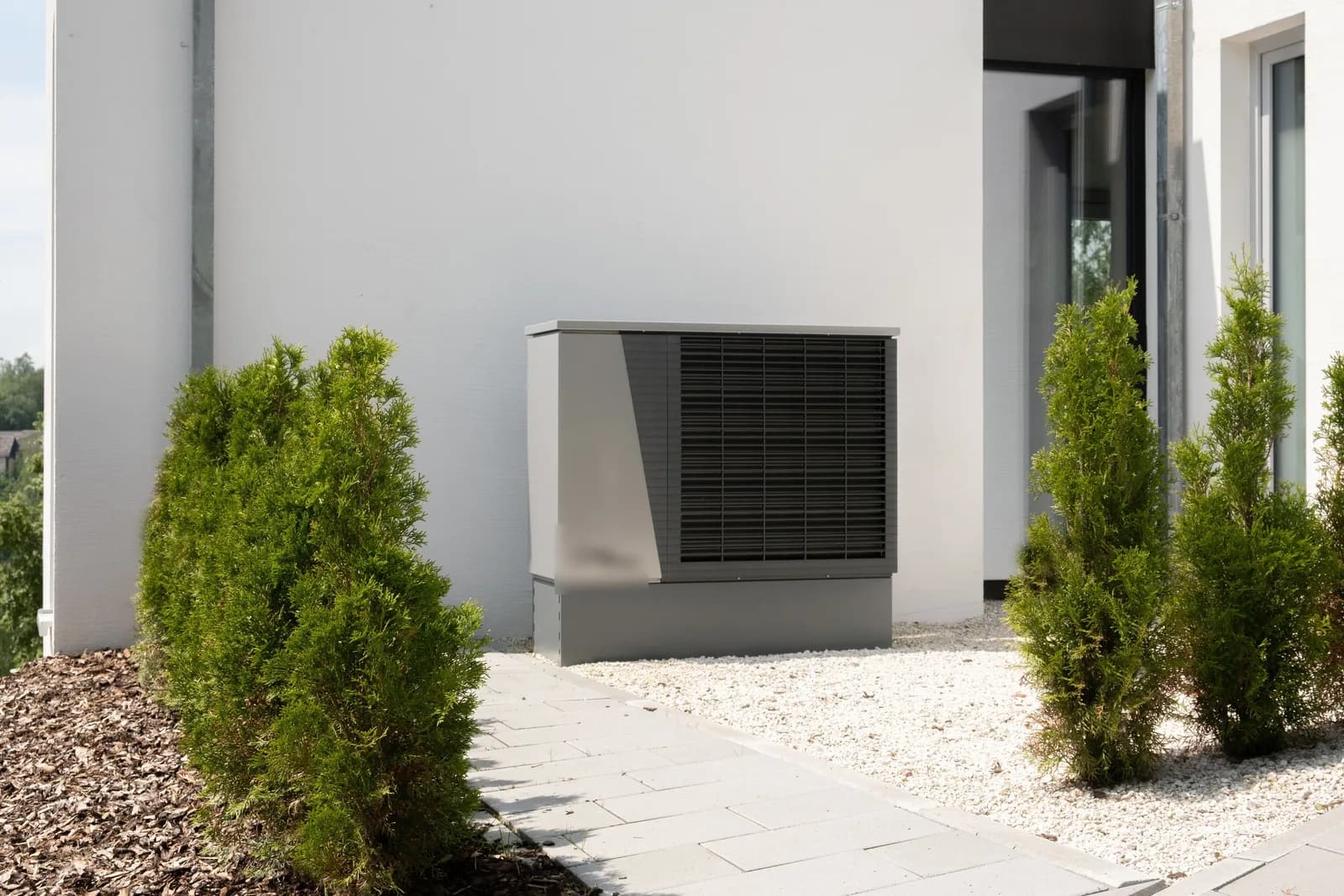
We install oil, propane, and natural gas furnaces from trusted brands. Modern high-efficiency furnaces can operate at 95% efficiency or higher, meaning more of your fuel dollar goes toward heating your home instead of going up the chimney. You might also want to consider a heat pump system for even greater efficiency and year-round comfort.
Proper sizing is critical for furnace performance. An oversized furnace short-cycles and creates temperature swings, while an undersized unit runs constantly without reaching comfortable temperatures. We perform a load calculation to determine the right size for your home.
Our furnace installations include removal of the old unit, new furnace installation, ductwork inspection and connection, thermostat setup, and a complete system test. We make sure everything is working properly before we leave.
How Do You Know It Is Time to Replace Your Furnace?
Age is the first signal: most furnaces last fifteen to twenty years, and past that point repairs start arriving in clusters. The other signs are rising fuel bills without a colder winter to blame, uneven heat between rooms, a burner that struggles to stay lit, visible rust or corrosion on the cabinet and flue, and — the one that ends the discussion — a cracked heat exchanger, which can leak carbon monoxide into your air stream and is rarely worth repairing on an older unit.
A useful rule of thumb: if a repair costs more than a third of replacement and the furnace is well into its service life, put the money toward new equipment. We show you both options and let you decide — our technicians are not commissioned, so the recommendation is not padded toward the bigger ticket.
Efficiency, Sizing, and What Installation Involves
Furnace efficiency is measured in AFUE — the percentage of fuel that becomes heat in your home instead of exhaust. Older units often run 70-80%; modern high-efficiency condensing furnaces reach 95%+, which means real savings on every fill-up or gas bill across a winter. Whether the jump to condensing efficiency pays off in your house depends on fuel type and venting, and we price both classes side by side.
Installation day: we remove and dispose of the old unit, set the new furnace, connect and seal the plenum and ductwork, run venting and condensate (for condensing models), wire the thermostat, and commission the system with a combustion analysis. Most replacements finish in a single day. If ductwork is leaky or undersized, we tell you before the install, not after — duct problems can erase the efficiency you just paid for.

Efficiency Maine
Rebates & Guidance
- Recommendation
Fossil-fuel furnace rebates aren't offered
Efficiency Maine's furnace/boiler guidance is informational only for standard oil, gas, and propane systems - there's no cash rebate for replacing them, only for wood-pellet (biomass) systems or for switching to a heat pump.
Source: Efficiency Maine - By the numbers· Apr 23, 2025
Statewide weatherization and oil-savings targets
Efficiency Maine's current three-year plan (through June 2028) targets 9,900 Maine homes weatherized and more than 35 million gallons of heating oil saved statewide over the lifetime of the funded upgrades.
Source: Efficiency Maine - Rebate
Insulation rebates pair with heating upgrades
Efficiency Maine rebates insulation work at 40% of project cost up to $4,000 for any income, 60% up to $6,000 for moderate income, or 80% up to $8,000 for low income households, separate from any heating-equipment rebate.
Source: Efficiency Maine
Program details as of Sep 26, 2026. Rebate amounts and eligibility change; confirm current terms at efficiencymaine.com.
Sizing, Static Pressure, Venting, and Filters: What Actually Happens Behind a Furnace Install
A furnace installation is more than setting a new box where the old one sat. Three things determine whether that new furnace runs quietly, lasts its full service life, and actually delivers the efficiency printed on its label: how it was sized, how well the ductwork matches what the furnace needs to breathe, and how the venting and condensate are handled once the furnace is a high-efficiency condensing model.
This guide walks through those three areas — sizing, duct static pressure, and condensing-furnace venting and condensate — plus how filter choice ties back into all of it. None of this replaces a site visit; it's meant to help you understand what a technician is actually checking and why it matters.
Manual J: Why Sizing Isn't a Guess
Manual J is the residential load calculation standard published by ACCA (Air Conditioning Contractors of America) — formally ANSI/ACCA 2 Manual J. It's the ANSI-recognized method for calculating how much heating and cooling a specific house actually needs, and it's required by national building codes and most state and local jurisdictions rather than being an optional best practice.
Manual J does not use the square footage of the house alone, and it does not use the size of the furnace being replaced. Both shortcuts are common and both are unreliable — an old furnace may have been oversized to begin with, and square footage alone says nothing about how much heat a specific house actually loses. Manual J instead works from the building itself: wall and ceiling insulation levels, window and skylight area and glazing type, air infiltration (how leaky the house is), square footage, the direction the house faces, internal heat gains, duct location and insulation, and the local outdoor design temperature — the cold snap the calculation assumes the system needs to handle, not the average winter day.
- Oversized furnace: short-cycles, wears out its components faster, and produces bigger temperature swings between on and off
- Undersized furnace: runs constantly during cold snaps and still falls behind the thermostat setting
- Correctly sized furnace (from a real Manual J): matches the house's actual heat loss, runs longer and steadier cycles, and gets the comfort and efficiency the equipment was designed for
We run a Manual J load calculation on the house rather than sizing a replacement off the old unit's nameplate or a square-footage rule of thumb.
Duct Static Pressure: The Spec Most Homeowners Never See
Every furnace has a rated external static pressure (ESP) — essentially, how hard its blower is designed to push air against the resistance of the duct system, filter, coils, and grilles it's connected to. That number comes from the manufacturer, and the duct system has to be designed to stay within it. ACCA's companion standard to Manual J, Manual D (ANSI/ACCA 1 Manual D), exists specifically to size ductwork correctly and account for the pressure drop created by every fitting, run, filter, and register in the system.
When a duct system pushes static pressure above what the furnace is rated for — undersized ducts, runs that are too long, too many tight turns, or a filter too restrictive for the space available — the blower works harder to move the same air and usually loses anyway. Airflow drops, so less heat reaches the rooms per cycle; the motor draws more current and runs hotter, shortening its life; and the system tends to run noisier and less evenly room to room. On a condensing furnace, low airflow across the heat exchanger can also affect how efficiently and safely it operates.
| What you notice | What's likely happening |
|---|---|
| Weak airflow at registers, especially rooms farthest from the furnace | Duct runs or fittings are creating more resistance than the blower can push through efficiently |
| Furnace blower sounds louder or higher-pitched than it used to | Blower motor is working harder against resistance than it's designed for |
| Furnace short-cycles or the limit switch trips | Airflow across the heat exchanger has dropped below what the furnace needs to shed heat safely |
| Uneven temperatures between rooms | Duct sizing or balancing doesn't match the load in each room |
Condensing Furnace Venting and Cold-Climate Condensate
A condensing (90%+ AFUE) furnace pulls enough heat out of its exhaust that the moisture in it condenses into liquid water — which is also mildly acidic. That's a fundamentally different design from an older, non-condensing furnace: instead of a hot metal flue running to a chimney, a condensing furnace uses sealed-combustion PVC or CPVC pipe for both the intake air and the exhaust, run directly through a wall or roof rather than up a chimney, and it produces a steady trickle of condensate that has to go somewhere on purpose.
That condensate drains through a line and trap built into the furnace, sometimes routed through a neutralizer before reaching a household drain, since acidic condensate can degrade metal pipe over time. In a cold climate like Maine's, what matters most is keeping condensate lines out of unheated spaces where the layout allows, sloping the line so water drains instead of pooling and freezing, and giving PVC vent terminations the clearance manufacturers specify so exhaust and intake stay clear of snow and ice. A frozen condensate line or an iced-over vent termination is one of the more common reasons a condensing furnace shuts itself down on the coldest day of the year — the furnace's safety controls doing their job, not a random failure.
Condensate and venting are installed to the manufacturer's specification for a reason — they aren't a homeowner adjustment. If a condensing furnace is locking out repeatedly in cold weather, that's a call for a technician, not a project for a warmer day.
Filter Rack and MERV Choices at Install Time
The filter rack (or media cabinet) is the housing that holds the return-air filter before it reaches the furnace, and its depth matters as much as the filter you put in it. A thin, 1-inch filter slot and a deep, 4-to-5-inch media cabinet can both hold a filter rated the same MERV — but they don't create the same resistance to airflow.
MERV (Minimum Efficiency Reporting Value) is the rating scale set by ASHRAE Standard 52.2, which tests how well an air-cleaning device removes particles of different sizes. The EPA has recommended MERV 13 or higher where practical, since that range captures much finer particles than a basic 1-4 rated filter. The tradeoff is airflow resistance: a higher-MERV filter is a finer mesh, and finer mesh packed into a small 1-inch slot can push static pressure higher than the duct system and blower were designed for. A deep media cabinet solves that by giving the same MERV rating far more surface area to pull air through, so resistance stays lower. Matching filter format to the furnace's rated static pressure — not just picking the highest MERV number on the shelf — is part of sizing the system correctly, not a separate decision.
| Filter format | Typical MERV range | Effect on static pressure |
|---|---|---|
| 1-inch fiberglass | MERV 1–4 | Low resistance, but minimal filtration |
| 1-inch pleated | MERV 8–13 | Noticeably more resistance in a small format; can strain an undersized filter rack |
| 4–5 inch media cabinet | MERV 8–13 (sometimes higher) | Same filtration level as a 1-inch pleated filter with much lower resistance, thanks to greater surface area |
Sources: ACCA — Manual J (ANSI/ACCA 2 Manual J) technical resource page · ACCA — Manual D (ANSI/ACCA 1 Manual D) technical resource page · EPA — Air Cleaners, HVAC Filters, and Coronavirus (MERV 13+ guidance) · ASHRAE — Standard 52.2, Method of Testing General Ventilation Air-Cleaning Devices for Removal Efficiency by Particle Size
Local & Independent
J&R Mechanical Services is an independent contractor — not a national franchise. Our technicians are not commissioned salespeople. We do the work you called us for, do it right, and earn the next call.
More Furnace Repair & Installation Services
Serving Augusta & Brunswick
Furnace Installation FAQs
How long does furnace installation take?
A straightforward replacement is typically completed in one day. Jobs involving significant ductwork, venting changes, or fuel conversion may take a second day.
What size furnace does my home need?
The size should come from a heat-loss calculation of your actual home — insulation, windows, air sealing, square footage — not from copying the old unit’s label. Oversized furnaces short-cycle and create temperature swings; undersized ones run constantly and still fall behind.
Should I replace my furnace with a heat pump instead?
Worth considering. Cold-climate heat pumps heat efficiently through most of a winter and add air conditioning. Many homes pair a heat pump with a furnace as backup. We install both, so we can price the options against each other honestly.
Do you remove the old furnace?
Yes — removal and disposal of the old unit is included in every installation, along with a full cleanup of the work area.
More Ways We Can Help
Google ReviewsServices
30We handle the full range of home comfort work, including…
Service Areas
9Our primary service areas are Augusta and Brunswick, along with…
Company
5You can also visit…
Get a Quote
Request Service
Fill out the form below to request an estimate or schedule service.
“*” indicates required fields
Need it today?Call (207) 902-8899