




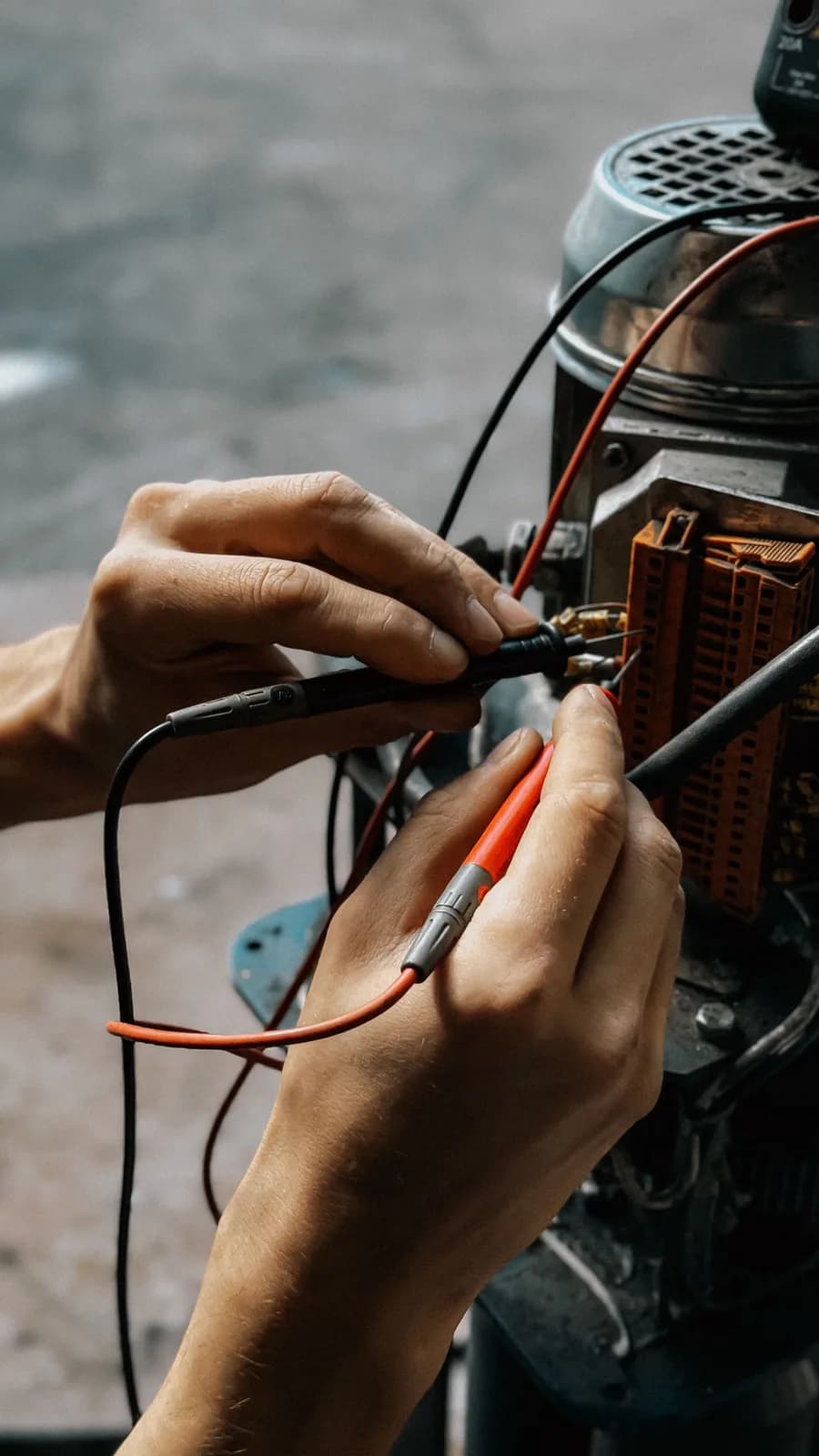
Our Approach to Furnace Repair
How a Furnace Works
- Return air — pulled in through the filter
- Blower — pushes air across the heat exchanger
- Burners — ignite to heat the exchanger
- Heat exchanger — transfers heat without mixing combustion gases
- Supply air — warm air delivered to the home
A broken furnace in winter is an emergency. J&R Mechanical Services provides fast, accurate furnace repair with honest diagnostics — we fix what actually needs fixing and nothing more.
Common furnace problems include no heat, blower issues, ignition failures, strange noises, short-cycling, and thermostat malfunctions. Our technicians can quickly identify the root cause and get your heat back on.
We repair oil, propane, and natural gas furnaces from all major manufacturers. We carry common parts like ignitors, flame sensors, blower motors, and control boards to complete most repairs in a single visit. Regular furnace maintenance can prevent many of these common issues.
If your furnace is at the end of its life and repair costs do not make sense, we will tell you honestly and help you evaluate replacement options. We never pressure you into a decision.
What Your Furnace Symptoms Usually Mean
Blowing cold air usually points to an ignition failure, a flame sensor coated in oxide, or a limit switch tripping on overheat — often from something as simple as a clogged filter choking airflow. Short-cycling (starting and stopping every few minutes) is commonly a dirty filter, a failing flame sensor, or an oversized furnace. Squealing suggests a blower belt or motor bearing; scraping metal means shut it down and call. A furnace that runs but keeps tripping its safety is doing its job — the safety is telling you something, and bypassing it is how CO accidents happen.
Oil furnaces add their own patterns: a reset button that keeps tripping points to fuel delivery or ignition trouble, and pressing it more than once can flood the combustion chamber with unburned oil. One press, then call us.
How We Handle No-Heat Calls
No heat in cold weather cannot wait, and we prioritize it that way. Our trucks carry the parts that cause most winter failures — ignitors, flame sensors, blower motors, control boards, oil nozzles and filters — so the large majority of no-heat calls are diagnosed and fixed in one visit. You approve the exact repair price before we touch a part, and because our technicians are not on commission, the part we replace is the part that failed — nothing more. Regular annual maintenance is the best way to never need this page in the middle of winter.
Furnace Control Board Diagnostics: What the Lights and Displays Mean
Most furnaces built in the last fifteen years or so have a self-diagnostic control board that logs a fault as a blinking light or an on-screen number rather than leaving a technician to guess. What most homeowners don't realize is that the table decoding each specific number is almost never published for consumers — it lives in the installation manual that ships with the equipment and stays with the installing contractor, not in the owner's manual or the brand's public website. That is true across every major brand we checked for this guide.
That gap is not an accident, and it is also not something a homeowner needs to work around. What actually helps before a service call is reading the light or code correctly and writing it down, understanding what a few universal furnace components do, and knowing which symptoms mean stop and call rather than keep trying. This guide covers what each manufacturer's own public documentation actually says about its diagnostic display, for the model lines we could verify, plus what a homeowner can look at safely.

Trane
Trane's own official troubleshooting page for residential gas furnaces describes the general behavior of the furnace's diagnostic light rather than a single numeric code list. It states that "a slow green light blinking may mean there is simply no call for heat," while "a faster green furnace light blinking continuously means the furnace is in active heating mode." A red blinking light is different: Trane's page says red blinking lights "generally signal a problem," but the exact pattern varies — "it might be a steady red light blinking on the furnace or control board, or two blinks and a pause, or the furnace light blinking three times and pausing." Trane's own advice is to "pay attention to the pattern of the blinking and write down what you see," since "each sequence means something different" and the meaning is specific to that furnace's own manual, not something the general support page defines.
| Light behavior | What Trane says it means | What to do |
|---|---|---|
| Slow green blink | No call for heat from the thermostat | Normal standby — no action needed |
| Fast, continuous green blink | Furnace is in active heating mode | Normal operation |
| Red blinking (steady, or a counted pattern with pauses) | A fault has been logged; the exact pattern maps to a specific problem defined in that model's own manual | Write down the exact pattern before power is cut, then call for diagnosis rather than guessing at the meaning |

Goodman
Goodman's manufacturer spec sheet for the GRVM97/GDVM97 — a modulating, variable-speed, 97% AFUE gas furnace — lists a "self-diagnostic control board with constant memory fault code history output to a dual 7-segment display" as a standard feature. The same document's wiring-diagram notes describe how a technician pulls that history: "to recall the last 6 faults, most recent to least recent, depress switch for more than 2 seconds while in standby." The spec sheet itself does not define what each numeric code means — that decode table is in the installation manual, consistent with the pattern across brands described above.
| Board feature | What it does | What it doesn't do |
|---|---|---|
| Dual 7-segment display | Shows current status and, on request, a stored numeric fault code | Doesn't explain what the number means without that model's installation manual |
| Fault history recall (hold the board's switch more than 2 seconds while in standby) | Displays the last 6 logged faults, most recent first | Isn't a homeowner repair step — it's how a technician finds an intermittent problem that already cleared |
Carrier
Carrier's owner's manual for the Infinity 98 condensing gas furnace (model 59MN7) confirms the furnace "has a light emitting diode (LED) status code display to aid the installer, service technician, or homeowner while installing or servicing the unit," visible "through the view port in the blower access panel." The manual is specific about sequence: "Record the LED status code BEFORE removing the blower access door or turning off 115-v power to the furnace," since the live code can be lost once power is cut, and it points to "the information booklet inside the main furnace door for a service code" to translate that number. That same manual gives one piece of guidance worth knowing even without a code showing: inspecting the burner flames should show "clear blue" fire, and "if you observe a suspected malfunction, or the burner flames are not clear blue, call your dealer" rather than adjust anything yourself.
| Instruction | Why it matters |
|---|---|
| Record the LED status code before cutting power or opening the access panel | A technician needs the exact code, not a description of what the light looked like, and it can be lost once power is interrupted |
| Check that burner flames are clear blue through the sight glass | A flame that isn't clear blue signals a combustion problem; the manual's own instruction is to call the dealer, not adjust the burner |
We pull the stored fault history from the board before replacing anything, the same way these manuals describe — it is usually faster and cheaper than swapping parts by guesswork.

Lennox
Lennox's own installation instructions for the SLP98UHV — a Dave Lennox Signature Collection modulating gas furnace — document a full "Integrated Control Diagnostic Codes" table read from the furnace's dual 7-segment display. The manual explains how a technician pages through it without a laptop: "Press the diagnostic push button and hold it to cycle through a menu of options... When the solid 'E' is displayed, the control enters the Error Code Recall mode," which lets stored faults be reviewed after the fact. The manual is specific that some faults are a "Hard lockout" — for example a tripped rollout switch — that won't clear itself by cycling power; the fix is correcting whatever tripped the switch, not resetting it repeatedly.
| Code | What the manual says it means | What to do |
|---|---|---|
| E 200 | Hard lockout — rollout circuit open or previously open | Correct what's tripping the rollout switch, or replace it and retest; don't just reset power |
| E 207 | Hot surface ignitor sensed open | Measure ignitor resistance and replace if open or out of spec |
| E 240 | Low flame current during run mode | Check flame-sensor microamps; clean or replace the sensor |
| E 270 | Soft lockout — maximum ignition retries exceeded, no flame sensed | Check gas flow, the ignitor lighting the burner, and flame-sensor current |

Rheem
Rheem's own installation instructions for the RGFG upflow, high-efficiency modulating condensing gas furnace describe a similar setup: the integrated furnace control (IFC) shows a fault code at its dual 7-segment display, and on communicating-thermostat systems the same code and a plain-English message also appear at the thermostat. The manual's own "FAULT HISTORY" menu — reached through the thermostat rather than a board switch — "gives information about the six most recent faults experienced by the furnace," the same kind of stored history a technician checks before opening the cabinet. Not every code is a malfunction: the manual is explicit that fault 66 is "merely an operating indicator," not something broken.
| Code | What the manual says it means | What to do |
|---|---|---|
| 33 — MRLC OPEN | Manually Reset Limit Control tripped; the manual calls this fault rare and serious | Check venting, wiring, and the burner/heat-exchanger assembly before manually resetting the switch |
| 10 — IGN 1 HR RTRY | Four failed ignition attempts; the furnace locks out gas heat for one hour before retrying | Check the flame-sensor rod, ignitor, and manifold pressure |
| 66 — BLWR OVERSPEED | Not a fault — an operating indicator that duct static pressure is limiting blower speed | Check for a dirty filter or restrictive ductwork |
What Homeowners Can Check Before Calling
A few checks are safe and require no tools beyond your hands and eyes. The filter: a fully clogged filter chokes airflow and can trip a safety switch on its own, so confirming it's in place and not visibly packed with dust rules out the single most common cause of a no-heat call. The furnace power switch: it looks like an ordinary wall light switch, usually mounted on or near the furnace cabinet, and it's occasionally bumped off or left off after other work in the area.
Two other components are worth understanding, even though servicing them is not a homeowner task. On a condensing (90%+ AFUE) furnace, a condensate trap collects the water byproduct of combustion before it drains away; if that trap clogs or the drain line freezes, the furnace's safety switch shuts the burner down rather than let condensate back up into the unit — which is the furnace doing its job, not a random failure. The flame sensor is a thin metal rod in the burner flame path that confirms combustion is actually happening; a coating of oxide buildup on it is a common reason a furnace fires briefly and then locks out. Cleaning a flame sensor and diagnosing a control board both involve gas and electrical components and are licensed-trade work.
If a furnace locks out, resist the urge to keep cycling the power or the reset switch to force it to run. Repeated resets don't fix whatever tripped the safety in the first place, and on a gas appliance that can mean repeatedly attempting ignition without addressing why it failed. One reset attempt, then call for diagnosis.
Sources: Trane — "Furnace Light Blinking: What It Means" (official residential furnace troubleshooting page) · Goodman — GRVM97/GDVM97 modulating gas furnace manufacturer spec sheet (SS-GRVM97_GDVM97-R32) · Carrier — Infinity 98 (model 59MN7) Condensing Gas Furnace Owner's Manual (OM9GFRC-02) · Lennox — SLP98UHV Dave Lennox Signature Collection Gas Furnace Installation Instructions (506610-01, 05/2011); original hosted at lennox.com, archived via web.archive.org since the live PDF was retired · Rheem — RGFG Upflow High-Efficiency Modulating Condensing Gas Furnace Installation Instructions (Table 24, Furnace Fault Codes); original hosted at rheem.com, archived via web.archive.org since the live PDF was retired
Brand names and logos are trademarks of their respective owners, shown only to identify the equipment discussed. J&R Mechanical Services is an independent contractor and is not affiliated with or endorsed by these manufacturers.
Local & Independent
J&R Mechanical Services is an independent contractor — not a national franchise. Our technicians are not commissioned salespeople. We do the work you called us for, do it right, and earn the next call.
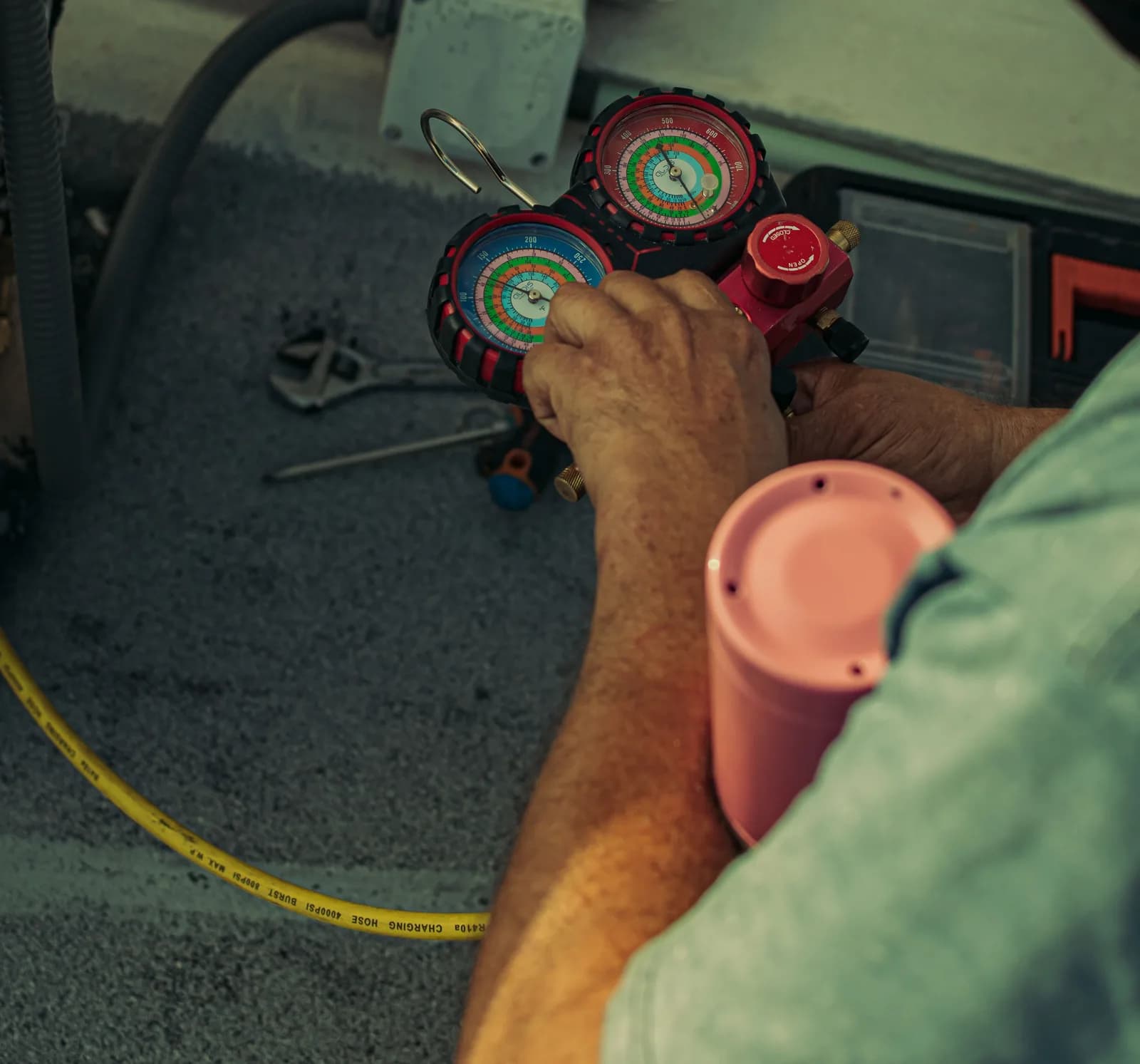
More Furnace Repair & Installation Services
Serving Augusta & Brunswick
Furnace Repair FAQs
My furnace stopped working — what should I check first?
Check the thermostat batteries and settings, the furnace power switch (looks like a light switch on or near the unit), the breaker, and the filter — a fully clogged filter can trip the furnace’s safety limit. On oil units, confirm you have fuel and press the reset button only once. If none of that works, call us.
Why does my furnace turn on and off every few minutes?
Short-cycling is most often a clogged filter causing overheating, a dirty flame sensor dropping the flame signal, or an oversized furnace reaching temperature too fast. It wastes fuel and wears components, so it is worth fixing promptly.
When is a furnace not worth repairing?
When it is well into its service life and facing a major repair like a heat exchanger, blower motor, or control board, replacement usually wins the math — especially counting the fuel savings of a modern high-efficiency unit. A cracked heat exchanger on an older furnace is almost always a replacement, for safety reasons.
Do you repair oil furnaces?
Yes — oil, propane, and natural gas. Oil-fired equipment is core work for our team, not an afterthought.
More Ways We Can Help
Google ReviewsCompany
5Connect with our team via…
Services
30We provide complete HVAC and plumbing service, including…
Service Areas
9We cover Kennebec and Cumberland County, including…
Get a Quote
Request Service
Fill out the form below to request an estimate or schedule service.
“*” indicates required fields
Need it today?Call (207) 902-8899