




Home Emergency? Call Us.
No heat or a burst pipe. J&R Mechanical Services handles heating and plumbing emergencies.
CALL (207) 902-8899What Kind of Emergency?
Whatever has gone wrong, call us. Here is the help we provide for common home emergencies.
Home Emergency Guide: The First 10 Minutes
J&R Mechanical Services handles heating, cooling, and plumbing emergencies for homes in Augusta, Brunswick, and the surrounding Kennebec and Cumberland County towns. This guide walks through the home emergencies we get called about most: a house with no heat in the middle of a Maine winter, a burst or frozen pipe, a leaking water heater, a sewer or drain backup, the smell of gas, a sounding carbon monoxide alarm, and a failed air conditioner during a heat wave.
For each one, we cover what to do in the first ten minutes, where the shutoff or breaker usually is, and when the right call is 911 or the gas utility rather than a contractor. None of this replaces a professional — several of these situations need a licensed technician no matter how quickly you respond — but knowing the first few steps can limit the damage, and in a few cases, keep everyone in the house safe, before anyone arrives.
It's worth reading this once before you need it, and worth writing your own shutoff locations down somewhere everyone in the house can find them. An actual emergency is not the time to be searching for them for the first time.
Quick reference: who to call
Not every emergency below needs the same call. This is the short version; the sections that follow explain the reasoning for each one.
| Situation | Call 911 | Call the utility / supplier | Call a contractor |
|---|---|---|---|
| No heat | Only if someone shows signs of hypothermia | No | Yes |
| Burst or frozen pipe | No | No | Yes, especially once it's split |
| Water heater leak | No | No | Yes |
| Sewer / drain backup | No | No | Yes |
| Gas smell | If you can't reach the utility/supplier, or near a damaged line | Yes, from outside the house | After the utility clears it |
| CO alarm sounding | Yes, if anyone has symptoms | No | Yes, to inspect appliances afterward |
| AC failure in a heat wave | Yes, for signs of heat stroke | No | Yes |
No heat in a Maine winter
A furnace, boiler, or heat pump that stops working in January isn't just uncomfortable — it puts the rest of the house's plumbing at risk within hours, not days. The Insurance Institute for Business & Home Safety (IBHS) recommends never letting a thermostat fall below 55°F in winter, even in a house nobody's currently living in, because a heating failure is one of the fastest ways a home goes from safe to at-risk, especially if it happens during a power outage.
In the first ten minutes: confirm the thermostat is set to heat and a few degrees above room temperature, check the breaker panel for a tripped switch, and look for an emergency switch that may have been bumped off. Most oil and gas systems have one at the top of the basement stairs and another on the unit itself — both are wired to look like an ordinary wall switch, which is exactly why they get flipped by accident.
- Check the furnace filter. A filter clogged enough can trip a limit switch and shut the whole system down as a safety measure.
- For an oil system, check the tank gauge. Running out of oil requires a technician to re-prime and bleed the burner, not just a fuel delivery.
- For a heat pump, brush snow or ice off the outdoor unit by hand, but don't chip at the coil with a tool — call if it's iced over rather than just snow-covered.
- If you smell fuel oil or gas, or hear repeated clicking with no ignition, stop trying to restart the system and call for service instead.
Burst or frozen pipes
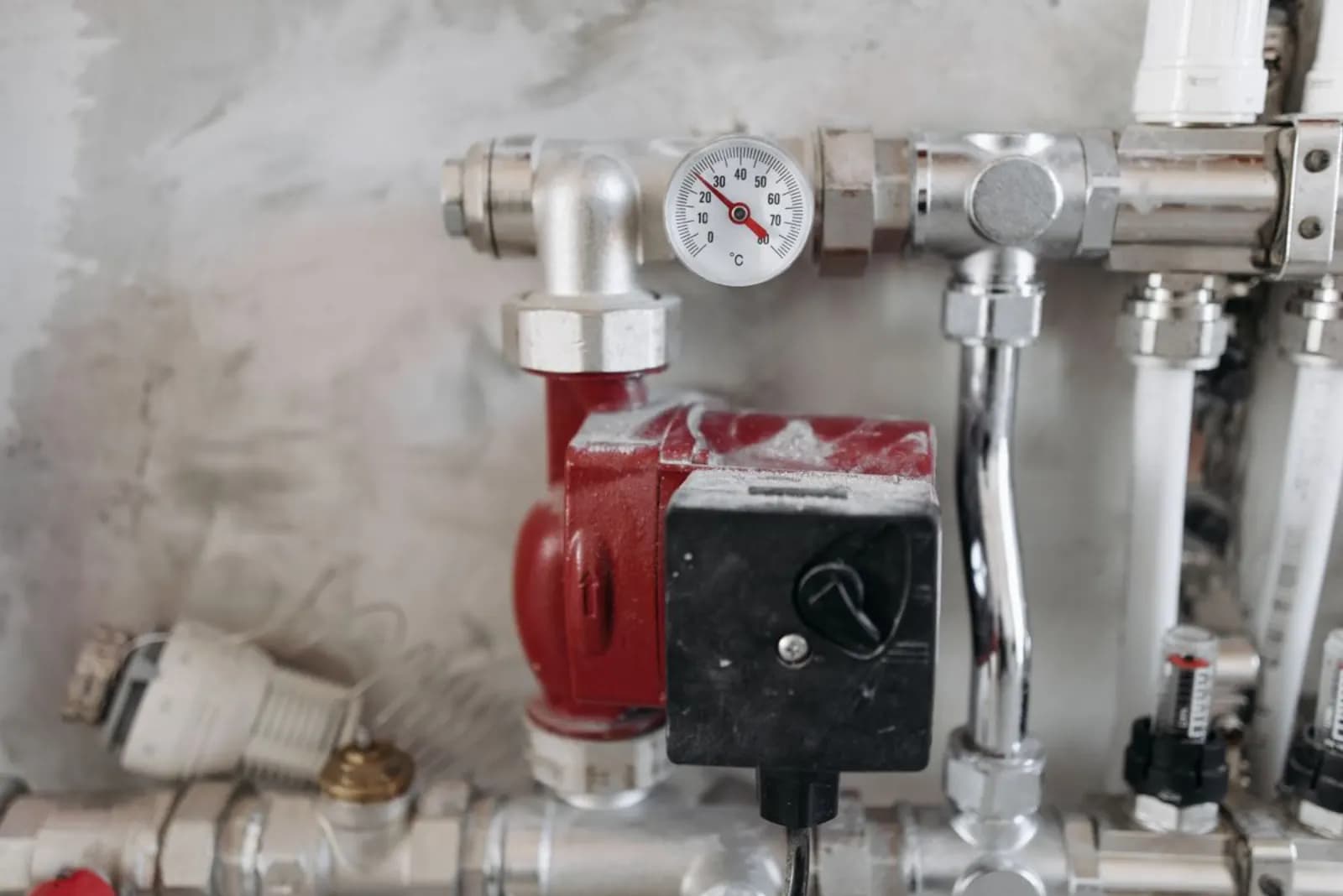
Pipes freeze first in the places with the least protection from indoor heat: exterior walls, unheated basements and crawl spaces, and attics. IBHS's winter guidance is built around that same 55°F thermostat minimum for exactly this reason — the margin between a home's plumbing being fine and starting to freeze can be a matter of a few degrees sustained over a few hours, not days, especially once a heating system has actually failed.
The main water shutoff is the first thing to find, and where it is depends on your house. On municipal water with a basement, it's usually where the supply line comes through the foundation wall near the meter. On a private well, water is stored under pressure in a tank, so you also need to shut off the well pump's breaker, not just a valve — our plumbing emergency guide covers both in detail.
- Shut off the main water valve immediately, then open the nearest faucet on the affected line to relieve pressure.
- If the pipe has already split, leave the main off and call — reopening the water before the repair is made floods the house rather than just the one pipe.
- If a pipe is frozen but hasn't split, you can apply gentle heat with a hair dryer or warm towels, working from the faucet end toward the coldest section.
- Never use a blowtorch or other open flame to thaw a pipe — it's a well-documented cause of house fires during cold snaps.
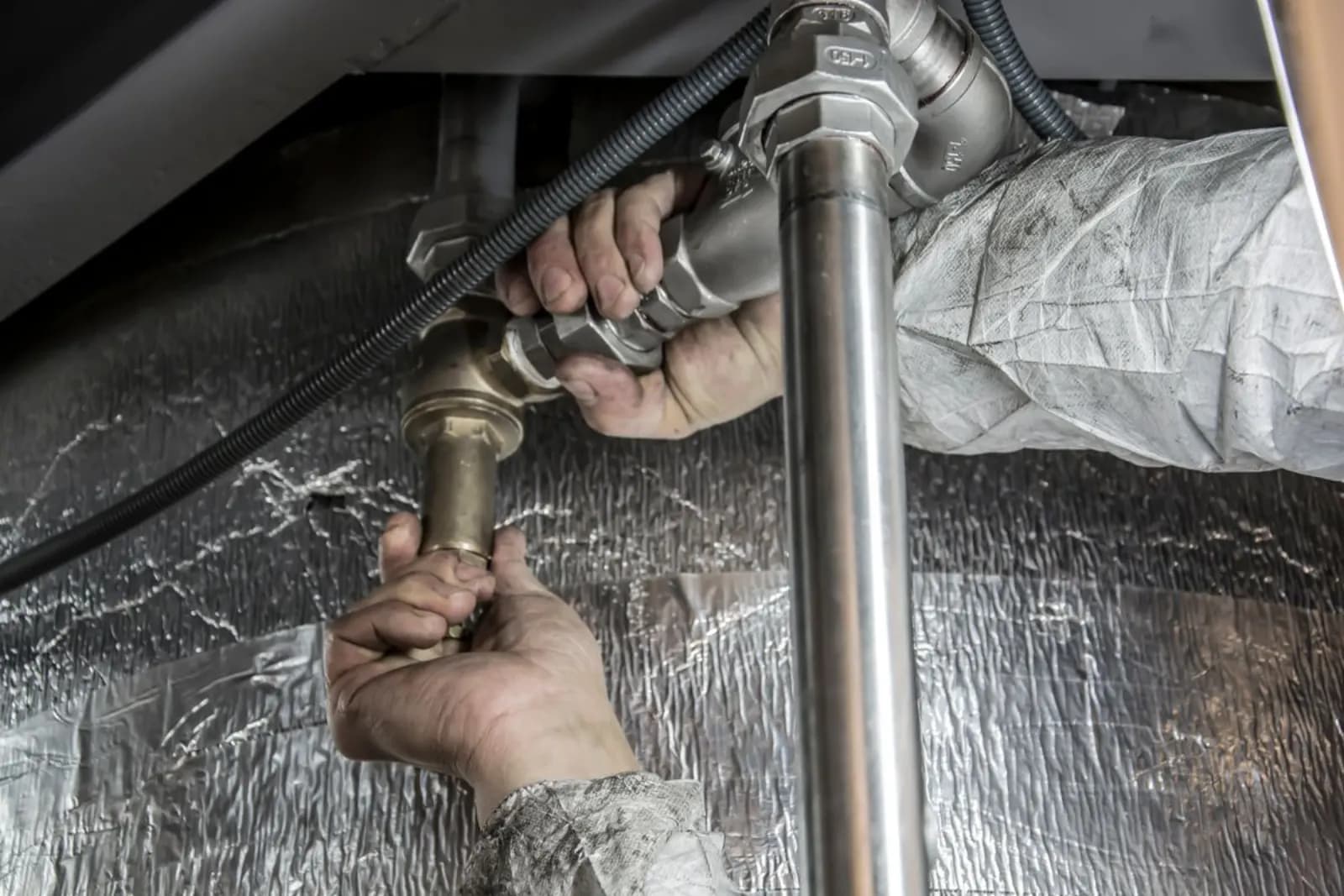
A leaking water heater
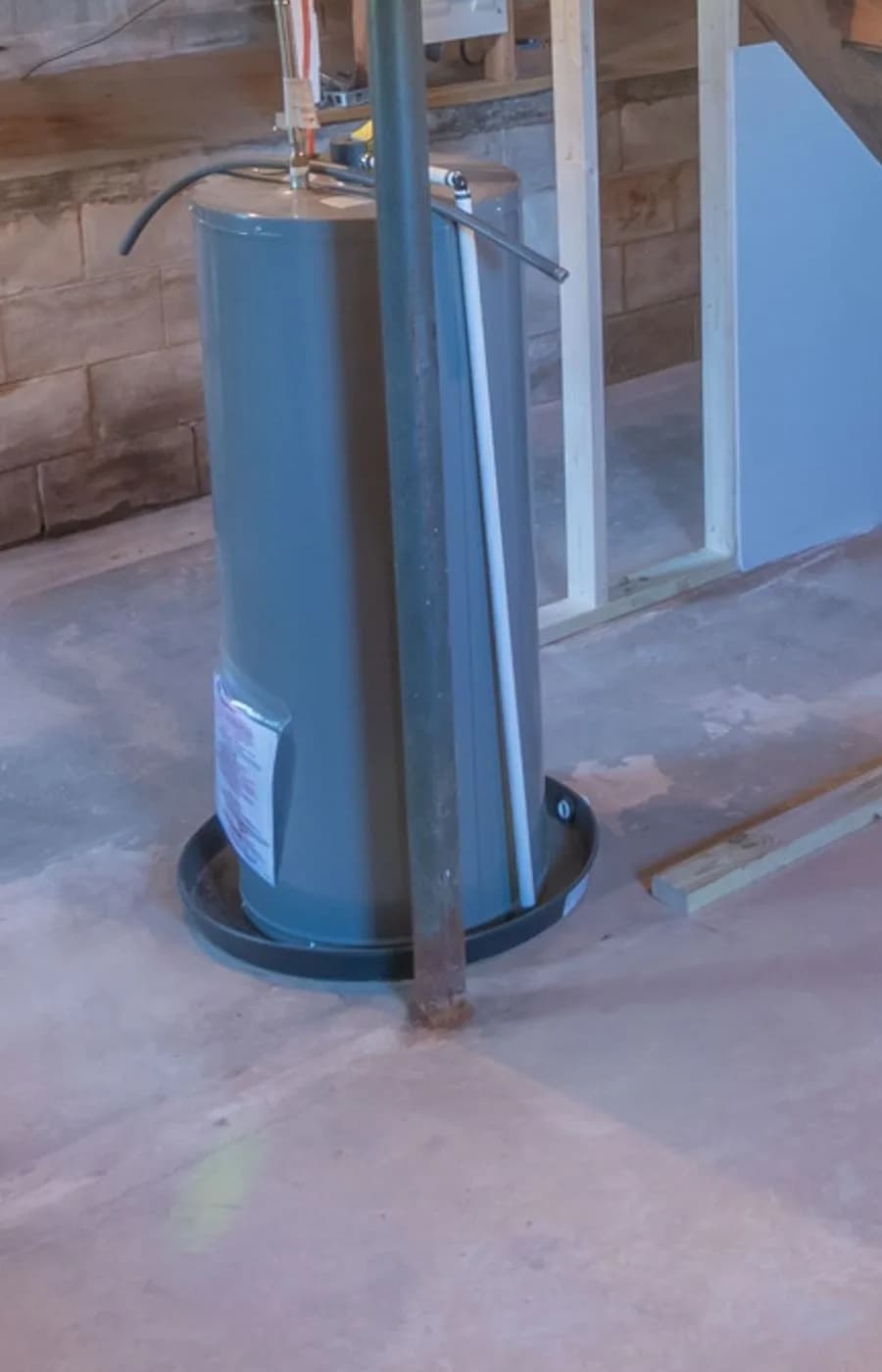
A water heater leak can come from a fitting or valve, which is often repairable, or from the tank body itself, which usually means replacement. Either way, the first step is the same: stop feeding water to the tank.
- Close the cold-water supply valve on top of the tank (turn clockwise).
- Gas water heater: turn the gas control knob on the front of the tank to Off. Leave the gas line itself alone unless you smell gas.
- Electric water heater: switch off the dedicated breaker (often two slots for 240V units) at the panel.
- If water is pooling near outlets or the electrical panel, don't step in it — shut off power at the main breaker only if you can reach it from dry ground, otherwise call an electrician or us first.
- Leaking from the tank body itself, rather than a connection, generally means the tank has failed and needs replacement — a free estimate covers your options.
A sewer or drain backup
A backup that comes up through a floor drain or the lowest fixture in the house — usually a basement toilet or shower — is different from an ordinary slow drain. It means the blockage is downstream of that fixture, and everything flushed or drained upstream is still pushing more water toward it. Sewage in a basement is a health hazard, not just a mess, so treat it that way from the first ten minutes on.
- Stop using water anywhere in the house. Every flush or drained sink upstream adds to what's backing up below.
- Keep people and pets away from the affected area, and wash any skin that contacts the water.
- If the home is on a septic system, don't run the dishwasher, washing machine, or take showers until the blockage clears.
- Don't run electrical equipment, including a wet/dry vac, while standing in the water.
- Call rather than repeatedly running a store-bought drain auger — pushing on a main line blockage can drive it further in or damage older pipe, turning a clog into a full pipe replacement.
You smell natural gas or propane
A gas smell is one of the few situations on this page where the first step is to leave, not to investigate. Don't flip light switches, don't use a doorbell or phone inside the house, and don't try to find the source yourself — a spark from any of those is enough to ignite an accumulated leak.
- Leave the house immediately and get everyone, including pets, a safe distance away before you do anything else.
- Call from outside, never from inside the house.
- If your home is in a Summit Natural Gas of Maine service area — the company is headquartered in Augusta and serves the surrounding area — their emergency line, listed on their own safety page, is 1-800-883-3181.
- If your home runs on propane instead, call your propane supplier's emergency number from outside; most propane companies print one on delivery invoices and their website.
- Call 911 if you can't reach the utility or supplier right away, or if the smell is near a damaged gas line or meter.
- Don't go back inside until the utility, propane supplier, or a technician confirms it's safe.
A carbon monoxide (CO) alarm sounds
CO is produced by any fuel-burning appliance — furnaces, boilers, water heaters, generators, fireplaces, even a car left running in an attached garage — and it has no smell of its own, which is the entire reason detectors exist. The EPA's guidance on responding to a CO alarm is specific about the first step: check whether anyone in the house is actually feeling symptoms before deciding what to do next.
- First, confirm it's the CO alarm and not the smoke alarm — the two sound similar and get confused in the moment.
- If anyone has symptoms of CO poisoning — headache, dizziness, confusion, nausea, or flu-like symptoms that clear up once they're outside — get everyone out of the house immediately and call 911. Tell responders you suspect CO poisoning.
- If no one has symptoms, ventilate the house with fresh air by opening windows and doors, and turn off any fuel-burning appliances you can safely reach.
- Either way, don't silence the alarm and return to normal. Have a qualified technician inspect every fuel-burning appliance and its venting before anything is used again.
Air conditioning fails during a heat wave
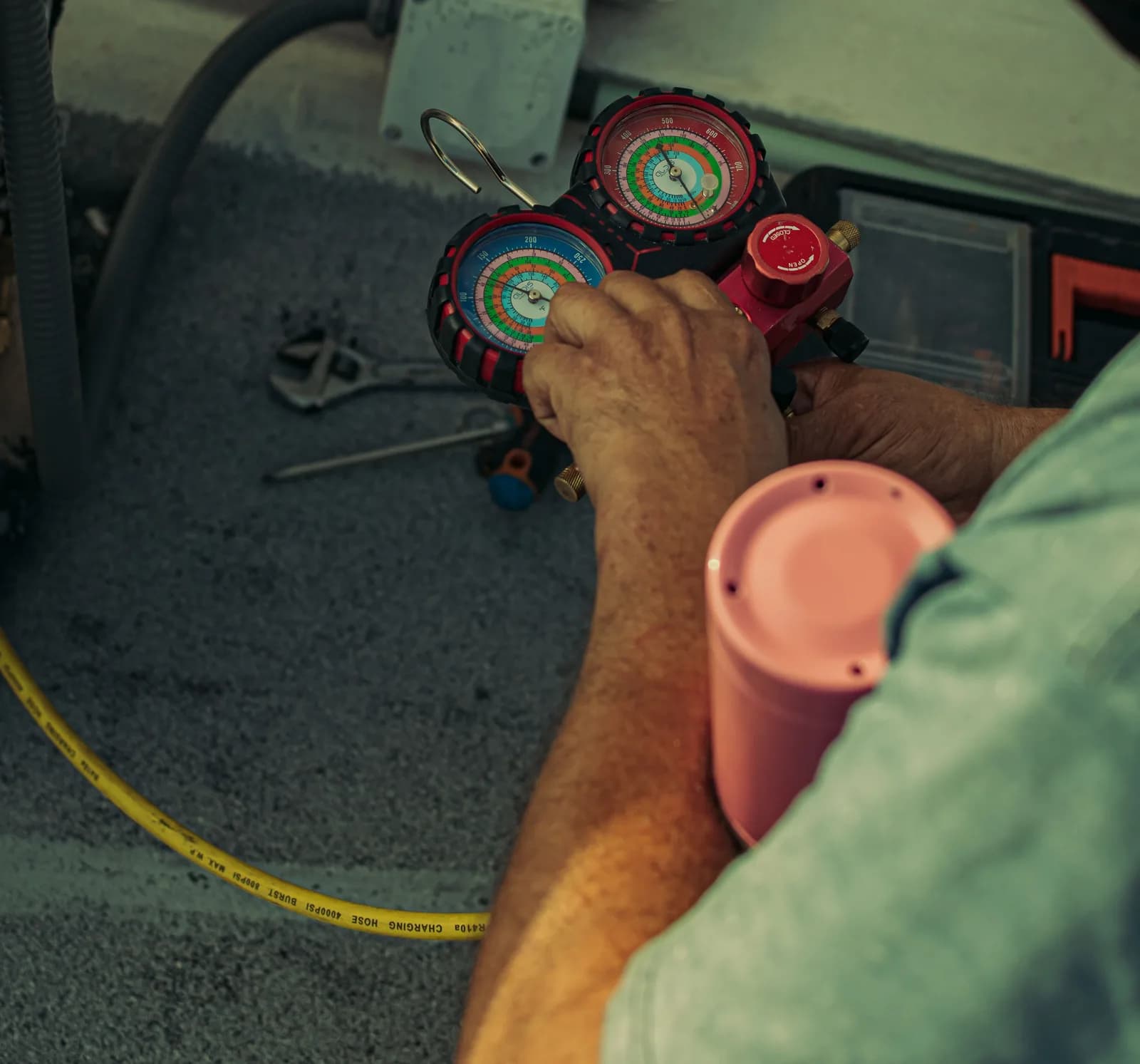
Losing cooling during a heat wave is uncomfortable for almost everyone, but it's genuinely dangerous for young children, older adults, and anyone with a heart or breathing condition. Federal heat-safety guidance separates heat illness into a few levels, and the difference changes what you should do.
- While you wait for a repair, close blinds and curtains on sun-facing windows, run bathroom and kitchen exhaust fans to pull out warm, humid air, and move to the lowest level of the house if you have one.
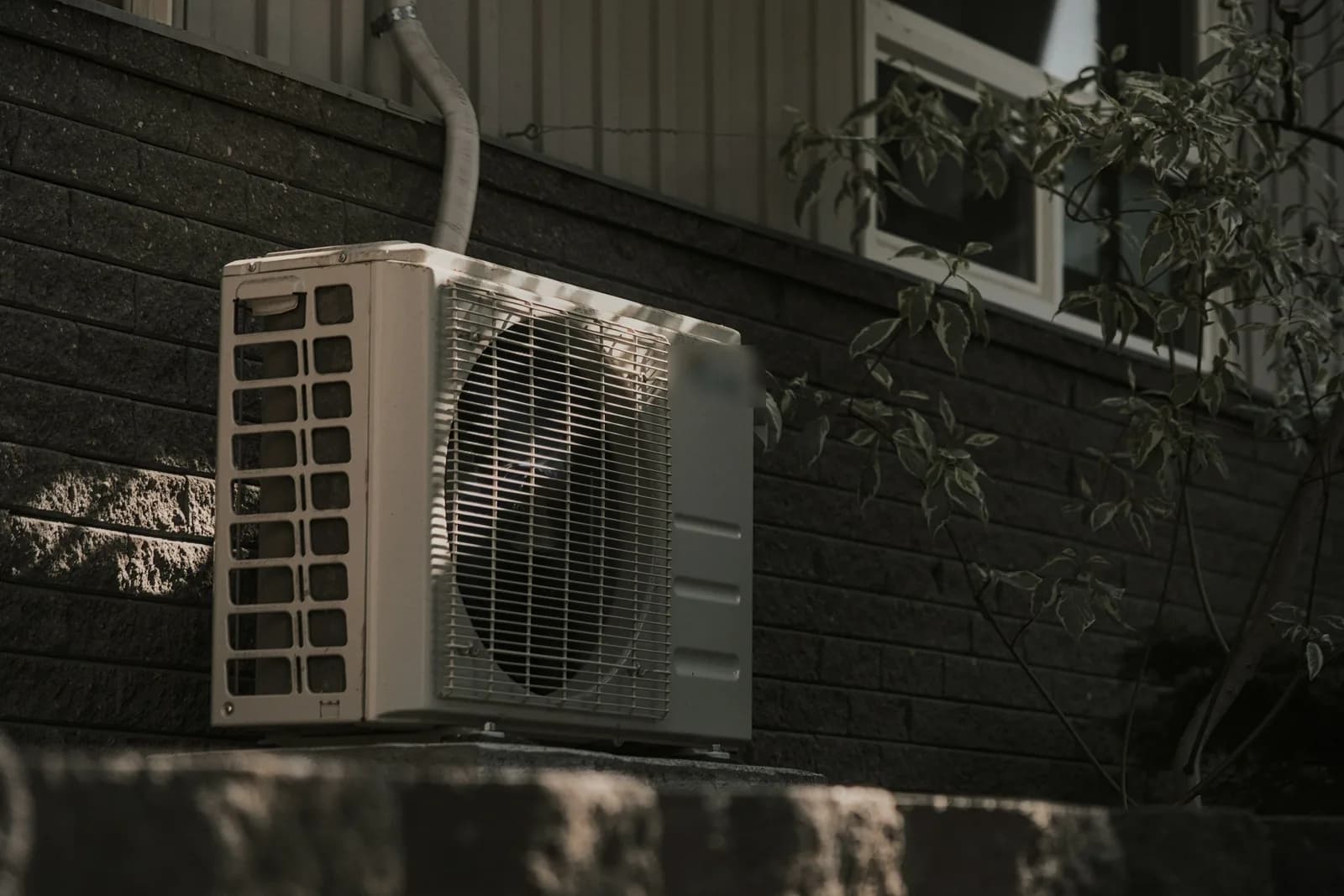
- Check that the outdoor unit isn't blocked by plants, debris, or a dirty condenser coil — sometimes that alone is enough to stop a system from cooling.
- Check the breakers for both the outdoor unit and the indoor air handler; on many systems the indoor blower is powered separately.
- If anyone in the house is very young, elderly, or has a chronic health condition, move them somewhere air-conditioned rather than waiting out a repair at home.
| Condition | Signs | What to do |
|---|---|---|
| Heat cramps / heat exhaustion | Heavy sweating, muscle cramps, weakness, fast pulse, dizziness, nausea | Move to the coolest available space, drink water, and contact a healthcare provider if it doesn't improve within an hour |
| Heat stroke | Body temperature above 103°F, hot red or dry skin with no sweating, confusion | Call 911 or get to a hospital immediately — this is a medical emergency |
Sources: IBHS — Winter Ready Home · IBHS — What to do after a winter weather event · IBHS — Home Upgrades to Further Protect Against Severe Winter Weather · Summit Natural Gas of Maine — Safety (emergency number) · EPA — Protect Your Family and Yourself from Carbon Monoxide Poisoning · EPA — Carbon Monoxide's Impact on Indoor Air Quality · Ready.gov — Extreme Heat
More Ways We Can Help
Google ReviewsServices
30Homeowners often pair this with our other offerings, including…
Service Areas
9Our primary service areas are Augusta and Brunswick, along with…
Company
5Get to know J&R Mechanical Services through…