






Ductless Mini-Splits
No Ductwork Required · Zone-by-Zone Control · Whisper-Quiet Operation
Our Approach to Ductless Mini-Splits
How a Ductless Mini-Split Works
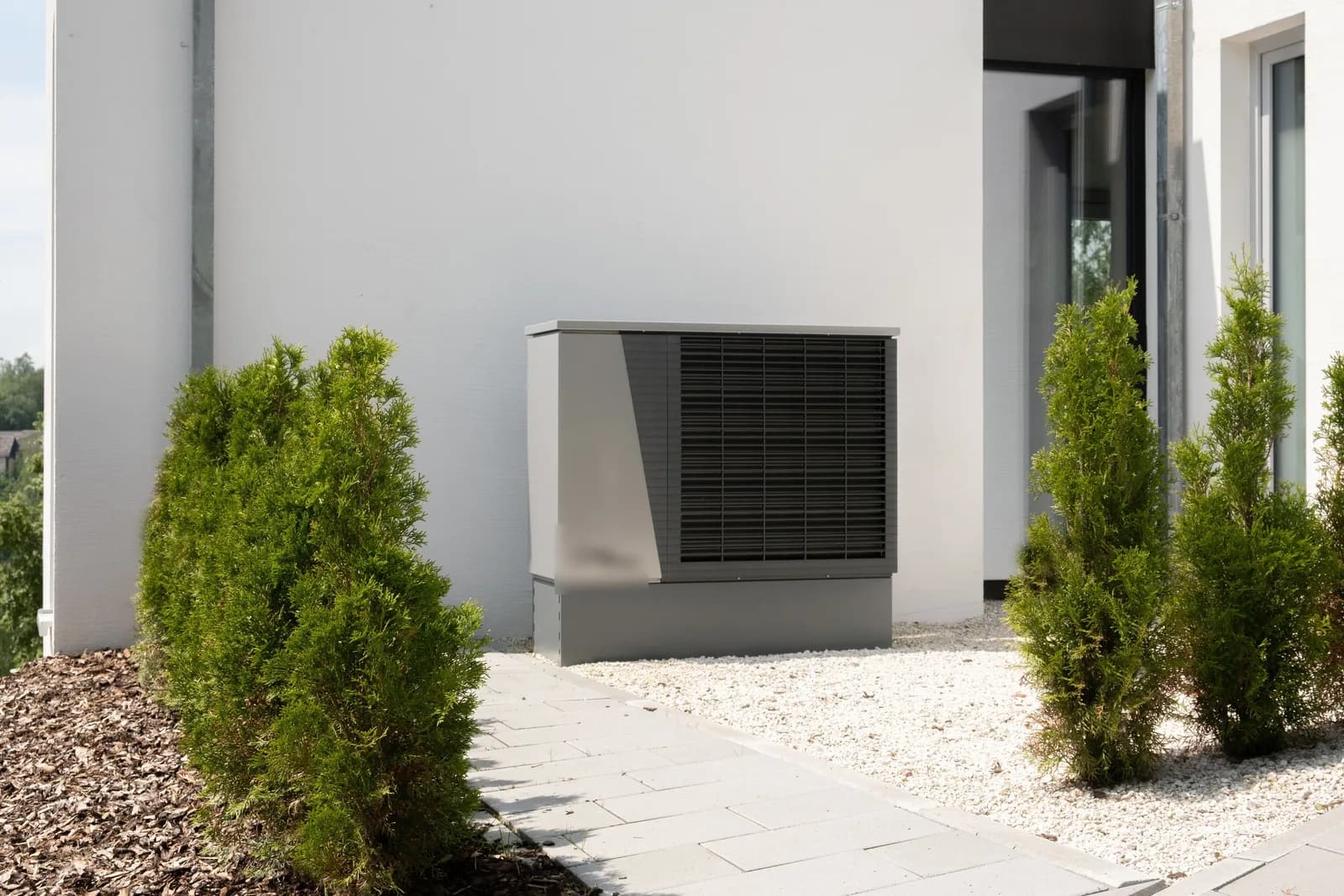
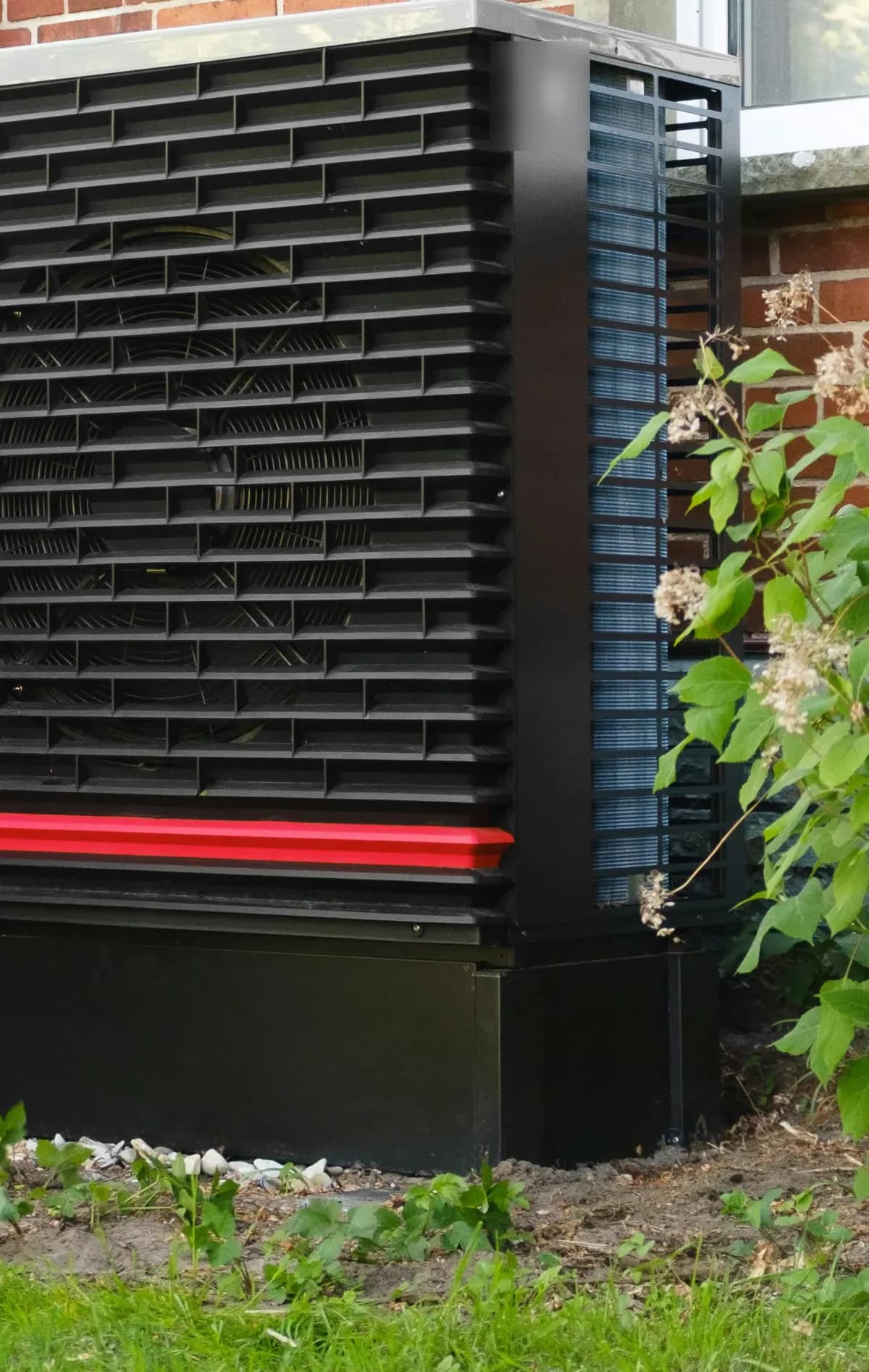
- Outdoor condenser — compressor and fan reject or absorb heat
- Line set — refrigerant lines run through the wall sleeve
- Wall sleeve — one small penetration, no ductwork needed
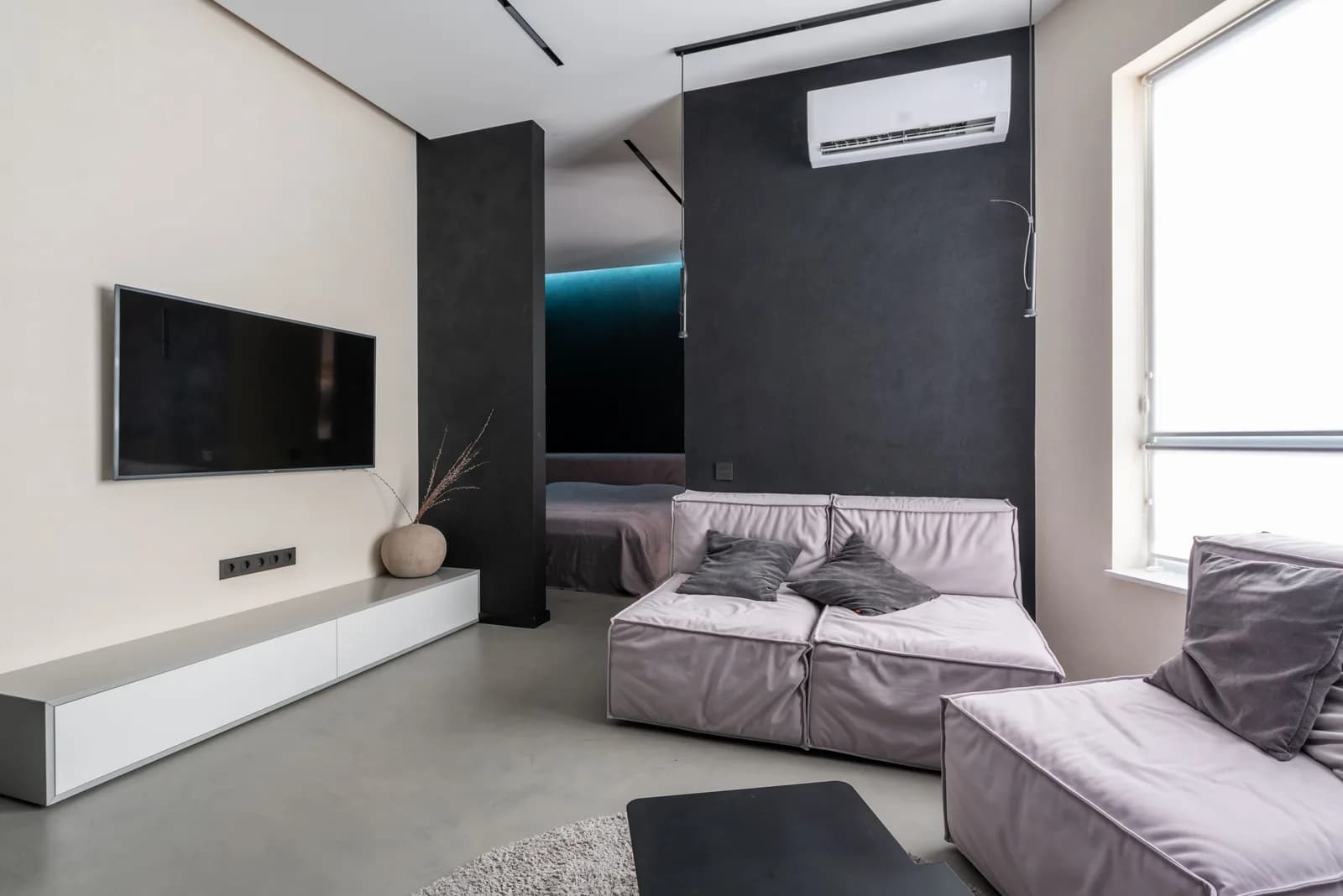
- Indoor wall head — coil and blower
- Warm air — directed by adjustable louvers
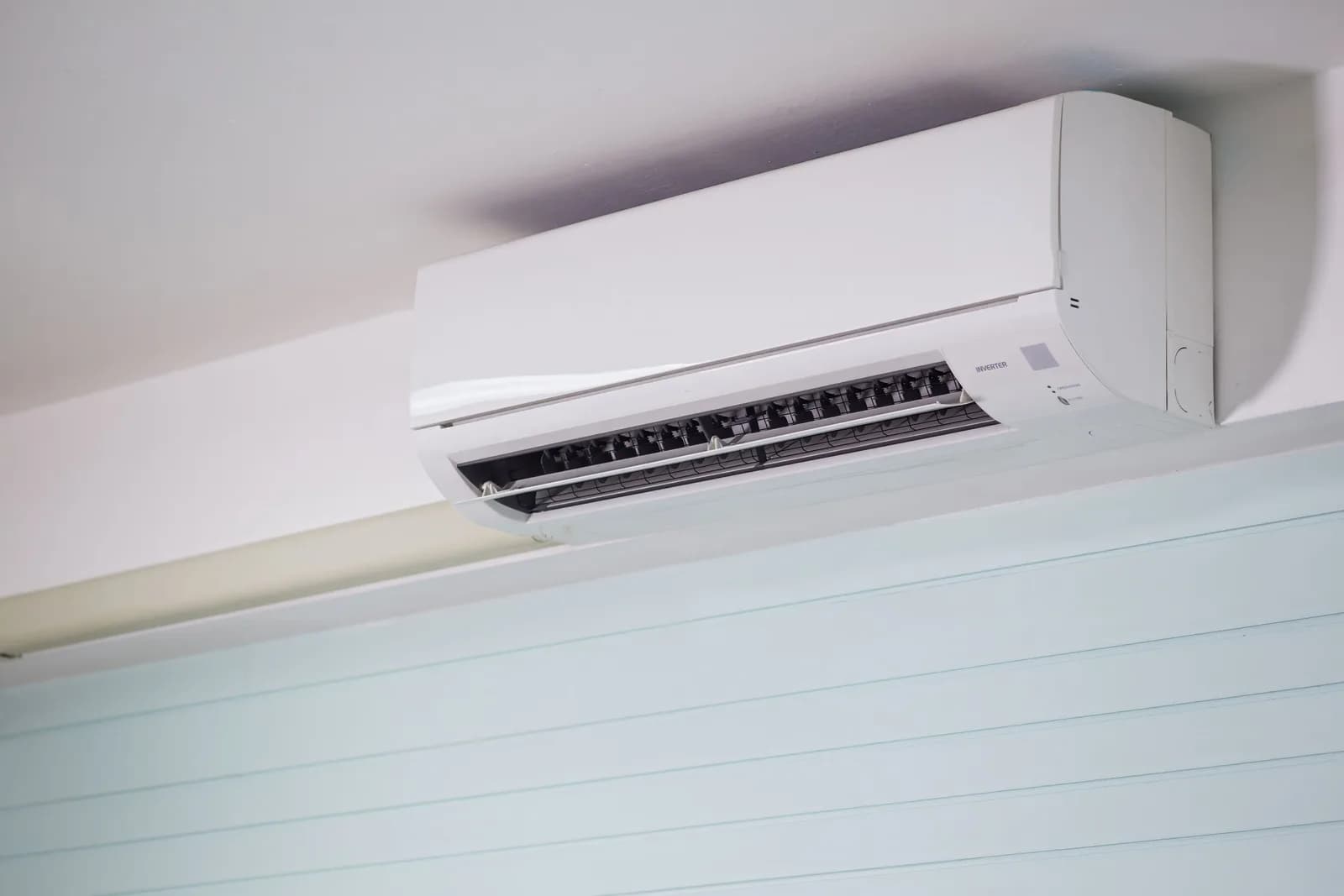
Ductless mini-split systems provide efficient heating and cooling without the need for ductwork. J&R Mechanical Services installs single and multi-zone mini-split systems for homes that need targeted comfort in specific rooms or areas.
Mini-splits are ideal for additions, finished basements, garages, bedrooms over garages, and older homes without existing ductwork. Each indoor unit operates independently, giving you zone-by-zone temperature control and eliminating the energy waste of heating or cooling unoccupied rooms.
We install wall-mounted, ceiling cassette, and floor-mounted indoor units depending on your space and preferences. Each installation includes proper sizing, clean line routing, and thorough testing to ensure optimal performance.
Modern ductless systems operate at whisper-quiet levels and include features like programmable schedules, Wi-Fi control, and advanced filtration. We help you choose the right configuration for your home and budget.
Single-Zone or Multi-Zone: Which Do You Need?
A single-zone system — one outdoor unit feeding one indoor head — is the right answer more often than the industry likes to admit. It is the most efficient, most reliable configuration, and it is perfect for the one space that never stays comfortable: the bedroom over the garage, the finished basement, the sunroom, the addition the old system never reached.
Multi-zone systems (one outdoor unit feeding two to five heads) make sense when you are conditioning several rooms and outdoor placement is limited, but they carry a trade-off: every head depends on one compressor, and lightly-loaded multi-zone systems can short-cycle. Sometimes two separate single-zone units beat one multi-zone on both efficiency and redundancy. We run the load numbers for your actual rooms and tell you which layout wins — we sell you the configuration your house needs, not the biggest system quote we can write.

Efficiency Maine
Rebates & Guidance
- Recommendation
Don't oversize the system
Efficiency Maine advises against oversizing: smaller, correctly sized heat pumps often heat and cool more effectively than an oversized unit, and there's little penalty to adding more units later if some rooms are still underheated after the first round.
Source: Efficiency Maine - Recommendation
Multiple single-zone units add redundancy
Efficiency Maine notes that single-zone heat pump setups have a comfort and reliability edge: each zone can run its own mode, and if one unit needs service, the others keep heating or cooling the rest of the home.
Source: Efficiency Maine - Rebate
Whole-home heat pump rebates
Efficiency Maine rebates whole-home heat pump systems by income tier: ducted systems get $3,000 (any income), $6,000 (moderate income), or $9,000 (low income); other whole-home systems get $1,000-$3,000 per outdoor unit depending on income. Your home may need more or fewer units, so the total varies.
Source: Efficiency Maine - News· Dec 31, 2026
$500 bonus for 2026 heat pump upgrades
Through December 31, 2026, Efficiency Maine is adding a $500-per-housing-unit bonus on top of its regular whole-home heat pump rebate for projects completed and claimed between March 1 and December 31, 2026.
Source: Efficiency Maine
Program details as of Sep 26, 2026. Rebate amounts and eligibility change; confirm current terms at efficiencymaine.com.
Choosing Mini-Split Heads, Planning Zones and Reading SEER2/HSPF2
A ductless system is a set of choices: what kind of indoor head goes in each space, how many zones the house really needs, and how efficient the equipment is. Each choice changes comfort, cost and how the system looks in your home.
This guide draws on Efficiency Maine's installation guidance and its list of rebate-eligible heat pumps, plus the federal efficiency rules, so you can compare quotes on the same terms.
Indoor Head Types Compared
Efficiency Maine's rebate list sorts single-zone systems by indoor unit type. The efficiency figures in the last column are medians across the model combinations on that list as of September 22, 2026, so they show the general pattern, not any one product.
| Head type | Where it goes | Strengths | Trade-offs | Median SEER2 / HSPF2 on the list |
|---|---|---|---|---|
| Wall-mounted | High on a wall | The most efficient type. Mounted high, it can heat or cool a large area. | The most conspicuous. Mounted too high, the filters are hard to reach for cleaning. | 23.0 / 10.5 |
| Ceiling cassette | Recessed in the ceiling, about the size of a suspended ceiling tile. Some models fit between standard joists. | Blows air in four directions from its edges and is nearly unnoticeable. | Tends to be less efficient than a wall unit. | 21.8 / 10.5 |
| Floor console | Low on the wall near the floor | Less conspicuous than a wall unit. | Not as efficient. Furniture can block its airflow, so it may not cover as large a space. | 20.4 / 10.3 |
| Slim (compact) ducted | Out of sight, often in an insulated attic, with short ducts to grilles | Out of sight, with inconspicuous grilles. One unit can serve several small rooms, such as bedrooms and bathrooms. | Every room on it shares one thermostat. Ducts should stay inside the home's insulation, the filter needs easy access, and each room should have a damper for balancing. | 19.2 / 10.5 |
Planning Zones in a Maine House
A zone is any space one indoor head controls. The goal is to put heads where heat will actually reach the rooms you use. Efficiency Maine points out that air flow is hard to predict and every building is different, but a few rules hold in most homes.
- Heat rises. A head may send some heat to the floor above it, but none to the floor below. A finished basement needs its own source.
- Stairs block heat. A head in one room can often warm the room next to it, but not if a stairway runs up between them.
- Open plans are easy and doorways are hard. One head can often handle an open kitchen and living room. A bedroom with the door usually closed may get little from a head outside it.
- Several small rooms, such as bedrooms along a hallway, are where a slim ducted unit can make sense. A common setup is a unit in an insulated attic feeding a hallway ceiling grille below.
- If heat pumps will not cover the whole house, Efficiency Maine recommends installing enough to take over entire boiler zones. A boiler thermostat left in a heat pump area can keep the boiler from serving the rest of that zone properly.
- With separate single-zone systems, each room can run in a different mode at once, such as cooling in a sunny office and heat in a north bedroom. On a multi-zone system, turning on heat in one room still sends a little heat to the others.
- You can add heads later. Efficiency Maine notes that, unlike a boiler or furnace, there is little to no financial penalty for installing heat pumps over time if some rooms stay cool.
If heat pumps take over and the boiler or furnace sits idle, an under-insulated basement can get cold enough to freeze pipes. Insulation, heat tape on at-risk pipes, or a space heater set just above freezing lowers that risk.
SEER2 and HSPF2, Explained
SEER2 measures cooling. It is the total heat removed from your home over a cooling season, in Btu, divided by the electricity used over that season, in watt-hours. HSPF2 measures heating the same way: heat delivered over a heating season divided by electricity used. Higher numbers mean less electricity for the same comfort.
Both ratings come from the Department of Energy's Appendix M1 test procedure, which replaced the older SEER and HSPF ratings for equipment made from January 1, 2023. The new numbers are not directly comparable to the old ones, and HSPF2 usually reads lower. Efficiency Maine's list shows one Daikin wall system, RXL12QMVJU9 with FTX12NMVJU, at 12 HSPF under the old test and 10 HSPF2 under the new one. NEEP equates 8.5 HSPF2 to about 10 HSPF.
Ductless mini-splits and multi-splits count as central air conditioners and heat pumps under federal rules, so these minimums apply to them. Maine is not in DOE's Southeast or Southwest regions, so only the national minimums apply here.
| Product class | Minimum SEER2 | Minimum HSPF2 |
|---|---|---|
| Split-system heat pump (includes ductless mini-splits) | 14.3 | 7.5 |
| Split-system air conditioner, cooling only (Maine and other northern states) | 13.4 | Not applicable |
| Single-package heat pump | 13.4 | 6.7 |
The federal minimum is a floor, not a target for Maine. HSPF2 is a seasonal average for a standard test climate, so it will not tell you how a unit performs at 5°F. When comparing quotes, ask for each model's HSPF2, SEER2, and its heating output and COP at 5°F.
Sources: Efficiency Maine, Ductless Heat Pump Installation Considerations · Efficiency Maine Residential List of Rebate-Eligible Heat Pumps (as of September 22, 2026) · Mitsubishi Electric residential products (indoor unit types) · eCFR, 10 CFR 430.32 energy conservation standards (as of September 1, 2026) · 10 CFR Part 430, Subpart B, Appendix M1 (SEER2 and HSPF2 definitions) · U.S. Department of Energy, Central Air Conditioners and Heat Pumps standards · NEEP Cold Climate Air Source Heat Pump Specification, Version 4.0
Local & Independent
J&R Mechanical Services is an independent contractor — not a national franchise. Our technicians are not commissioned salespeople. We do the work you called us for, do it right, and earn the next call.
More Heat Pumps & Mini-Splits Services
Serving Augusta & Brunswick
Ductless Mini-Splits FAQs
Can a mini-split heat a room all winter?
Yes — cold-climate mini-splits are rated to keep producing heat well below zero. Correct sizing and mounting the outdoor unit above snow line are what make the difference.
Are mini-splits noisy?
No — modern indoor heads run at whisper-quiet levels on low fan speeds, quieter than a refrigerator, and the compressor noise stays outside. If a mini-split is loud, something is wrong with it.
Do mini-splits need maintenance?
Yes: rinse the indoor filters every few weeks during heavy use, and have the system professionally cleaned and checked once a year — coils, blower wheel, refrigerant charge, condensate drain, and defrost operation.
How long does installation take?
A typical single-zone installation is finished in one day, including full commissioning. Multi-zone projects usually take two to three days.
More Ways We Can Help
Google ReviewsServices
30Explore the rest of what we do, from…
Service Areas
9We serve Augusta, Brunswick, and towns throughout Kennebec & Cumberland County, including…
Company
5A few more places to begin include…
Get a Quote
Request Service
Fill out the form below to request an estimate or schedule service.
“*” indicates required fields
Need it today?Call (207) 902-8899