







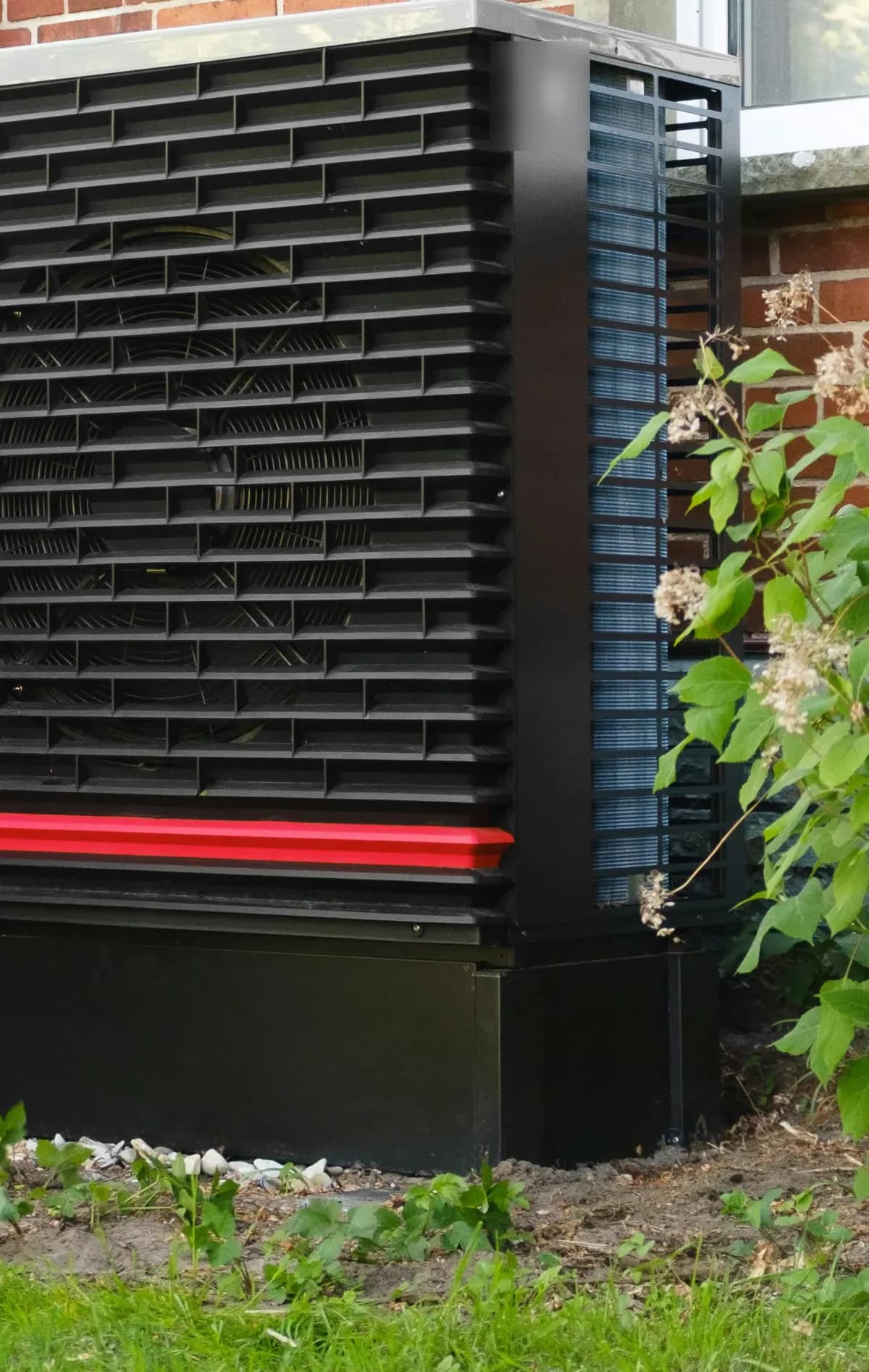
Heat Pump Maintenance
Annual Tune-Up Service · Filter Cleaning & Replacement · Performance Testing
Our Approach to Heat Pump Maintenance
How a Heat Pump Works
- Outdoor unit — fan and compressor extract heat from outside air
- Reversing valve — switches the system between heating and cooling
- Line set — carries hot, high-pressure refrigerant indoors
- Indoor coil — releases heat into the airstream
- Warm air — the blower delivers it to the room
Regular maintenance keeps your heat pump running efficiently and extends its lifespan. J&R Mechanical Services provides thorough tune-up service that catches small issues before they become expensive problems.
Our heat pump maintenance service includes cleaning indoor and outdoor coils, checking refrigerant levels, testing defrost cycles, cleaning or replacing filters, and verifying overall system performance.
Cold-climate weather puts extra demands on heat pumps. Ice buildup, debris around outdoor units, and seasonal transitions all affect performance. Regular maintenance ensures your system is ready for both heating and cooling seasons.
We recommend annual maintenance for most heat pump systems. A well-maintained heat pump uses less energy, heats and cools more evenly, and lasts years longer than a neglected one. Schedule your tune-up before the season changes.
What Does a Heat Pump Tune-Up Include?
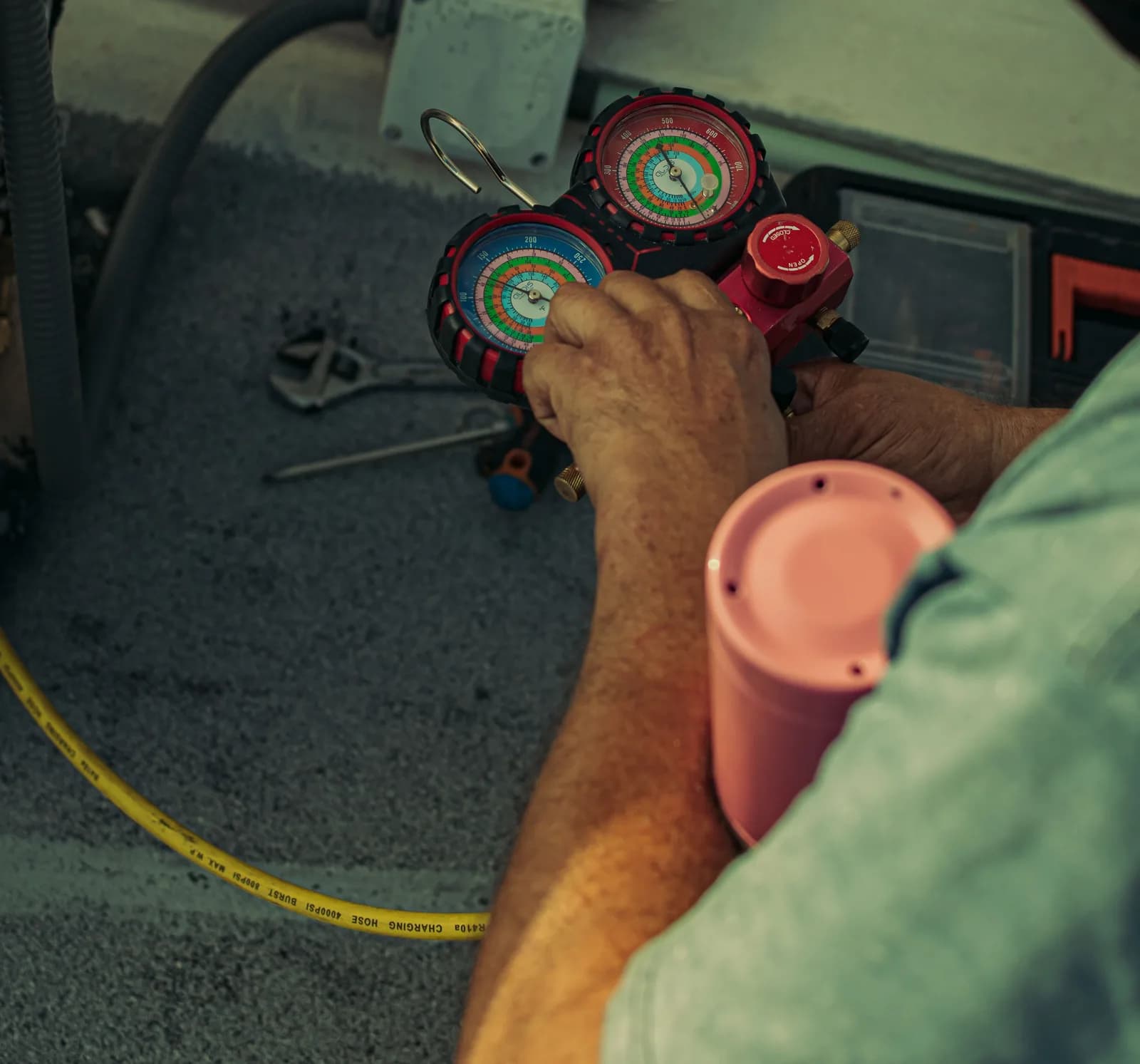
A full visit, not a filter rinse. We deep-clean the indoor head’s filters, blower wheel, and coil (where the mold and dust that cause the classic "dirty sock" smell actually live), wash the outdoor coil, verify refrigerant charge and temperature split with instruments, test the defrost cycle, clear the condensate drain, check mounting hardware and line-set insulation, and confirm the base pan drains so winter defrost water is not refreezing into an ice block under the unit.
You get a straight report at the end: what we measured, what we cleaned, and whether anything is trending toward a future repair. If nothing is wrong, the report says nothing is wrong — we have no upsell quotas, so a healthy system gets a clean bill, not a sales pitch.
Why Heat Pumps Need Yearly Attention
Heat pumps in cold climates work nearly year-round, heating through long winters and cooling in summer, so they accumulate runtime faster than systems in milder climates. Dirty coils force the compressor to work harder, which is the single biggest driver of premature failure and quietly inflates your energy bill month after month. Corrosion, pollen, and pet hair mat indoor filters, and snow-season defrost cycles put extra stress on sensors and boards.
An annual cleaning restores lost efficiency immediately, keeps manufacturer warranty requirements satisfied, and catches small issues — a weakening capacitor, a slow refrigerant leak — while they are cheap. The best schedule for most homes is spring or fall, between the heavy heating and cooling seasons.

Efficiency Maine
Rebates & Guidance
- Recommendation
Multiple single-zone units add redundancy
Efficiency Maine notes that single-zone heat pump setups have a comfort and reliability edge: each zone can run its own mode, and if one unit needs service, the others keep heating or cooling the rest of the home.
Source: Efficiency Maine - Recommendation
Keep a backup for extreme cold or outages
Efficiency Maine says a properly sized, selected, and located heat pump system can heat a Maine home without backup, but it can still make sense to keep a boiler, furnace, or generator-ready backup on hand for outages or the coldest snaps.
Source: Efficiency Maine - By the numbers· Apr 23, 2025
State heat pump goal through 2028
Efficiency Maine's Triennial Plan VI, approved April 23, 2025, targets 38,000 Maine homes heated entirely by heat pumps by mid-2028, including 6,500 low-income homes, with typical households saving more than $600 a year on heating.
Source: Efficiency Maine
Program details as of Sep 26, 2026. Rebate amounts and eligibility change; confirm current terms at efficiencymaine.com.
Filter Schedules, Defrost Mode and Winter Care
Most heat pump care is simple, but the details matter: how often the manufacturer wants the filters cleaned, what a normal defrost cycle looks like, and which jobs belong to a technician.
Everything below comes from manufacturers' owner manuals, Efficiency Maine's guidance for Maine heat pump owners, and the Department of Energy's test rules.
Filter Cleaning: What the Manuals Say
Mitsubishi explains why the schedule matters: dirty filters cause condensation inside the unit, which contributes to mold. Carrier says a clogged filter hurts both cooling efficiency and your health.
| Model line and filter | Interval | How |
|---|---|---|
| Mitsubishi MSZ-GX, main air filter | Every 2 weeks | Vacuum or rinse with water, then dry in the shade. |
| Mitsubishi MSZ-GX, air cleaning filter | Vacuum every 3 months, replace every year | If vacuuming does not clear it, soak it in lukewarm water before rinsing. |
| Mitsubishi MSZ-GX, optional microparticle filter | Vacuum every 3 months, replace every 3 years | Do not wash it with water. |
| Carrier 45MAHAQ, main air filter | Every 2 weeks | Wash in warm water with mild detergent, rinse, shake off, and dry out of direct sun, which can shrink the filter. |
| Any brand (Efficiency Maine) | Whenever visibly dirty or when the filter light comes on | Vacuum, rinse or replace. |
Turn the unit off and disconnect power before removing filters. Carrier warns of sharp metal edges inside, and both Carrier and Mitsubishi say not to clean the inside of the unit with water.
What Defrost Mode Looks Like, and Why It's Normal
In heating mode, the outdoor coil runs colder than the outside air. Mitsubishi's manual notes that frost forms when the outside temperature is low and humidity is high. The unit clears it on its own.
Federal test rules describe two common controls. Demand defrost starts only when sensors detect a set drop in performance from frost. Time-temperature defrost starts after a set amount of compressor run time, such as 30, 45 or 90 minutes.
| What you notice | What the manual says is happening |
|---|---|
| Heat stops for up to about 10 minutes | The outdoor unit is defrosting. Mitsubishi says this finishes within 10 minutes. |
| White "smoke" rising from the outdoor unit | Vapor from the defrost looks like white smoke (Mitsubishi). |
| Water dripping from the outdoor unit | Ice on the outdoor unit is melting and draining (Mitsubishi). |
| The indoor vane flattens to horizontal | Set automatically during defrost or when the air coming out is too cool (Mitsubishi). |
| White mist from both units when heat restarts | Moisture left from the defrost process (Carrier). |
| A low hiss from either unit | Refrigerant stopping or changing direction, which Carrier calls normal. |
Mitsubishi and Carrier both warn against using any means to speed up defrosting other than those the manufacturer recommends. Do not chip ice off the coil or pour hot water on it.
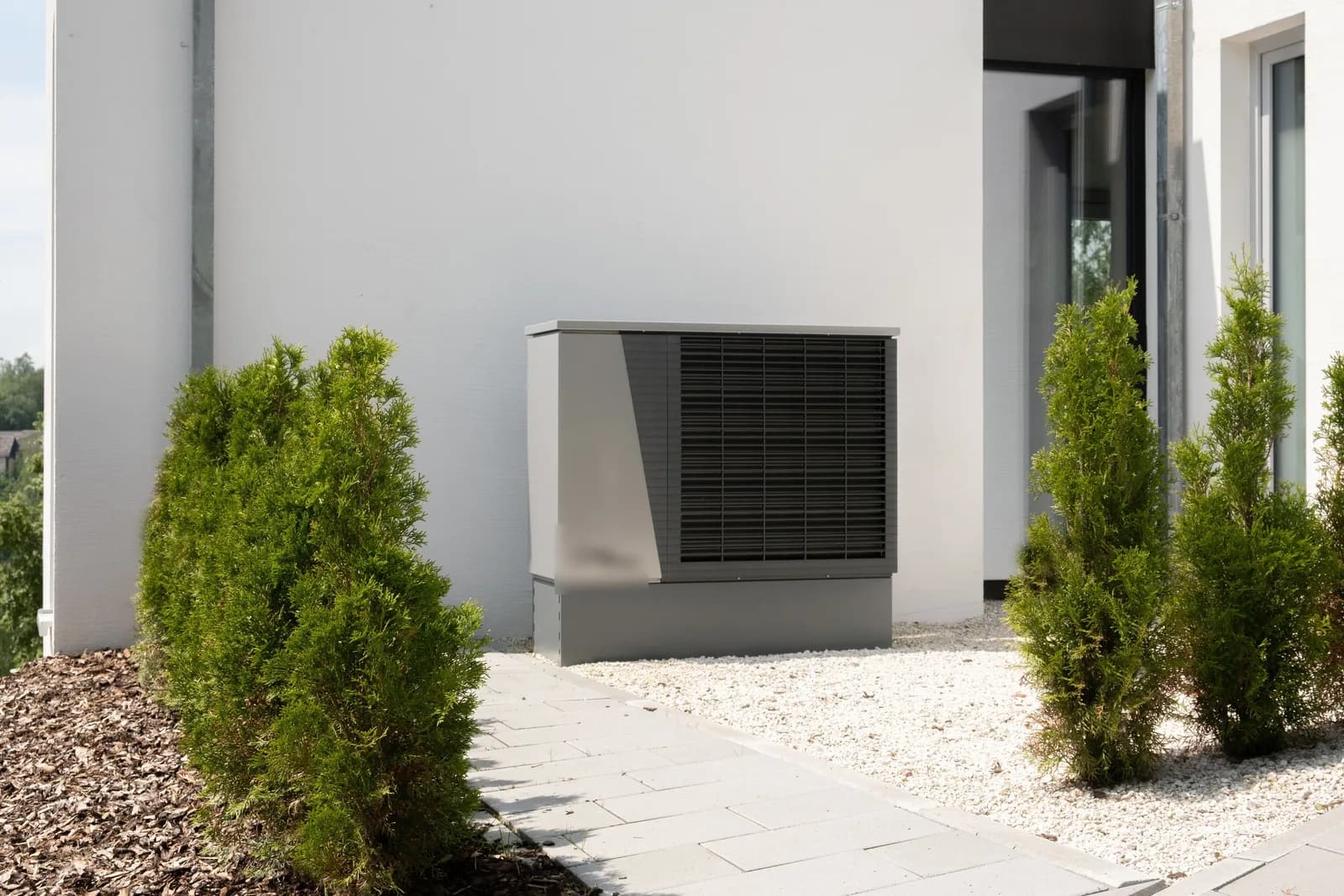
Snow and Ice Around the Outdoor Unit
- Clear drifts away from the unit. Efficiency Maine says not to worry about snow and ice that settle on the unit itself, because heat pumps defrost automatically.
- Keep the air inlet and outlet open. Mitsubishi lists a blocked inlet or outlet as a reason a room will not heat.
- Watch where defrost water goes. Efficiency Maine's install checklist requires that it not form ice on a walkway. If it does, or if ice builds up under the unit, call for a look at drainage.
- If the unit sits under a roof edge without a rain cap, dripping water can ice it up. Efficiency Maine recommends a rain cap in that spot.
- Do not climb on the outdoor unit or set anything on it. Mitsubishi warns this can cause injury.
Homeowner Care vs. Professional Service
Efficiency Maine advises following manufacturers' recommendations for professional cleaning in addition to regular filter cleaning. Mitsubishi says scheduled cleaning, inspection and safety checks should be done by a licensed, trained HVAC technician, because dirt inside the unit can cause odors and mold or clog the drain and leak water indoors.
- J&R mini-split cleaning: $169 for the first head and $49 for each additional head.
- J&R heat pump deep clean: $299 per head.
| Task | Who | Basis |
|---|---|---|
| Clean the main filters every 2 weeks | Homeowner | Mitsubishi and Carrier manuals |
| Vacuum and replace specialty filters on schedule | Homeowner | Mitsubishi manual |
| Keep snow drifts and debris away from the outdoor unit | Homeowner | Efficiency Maine |
| Before a long idle period, dry the unit out (fan mode for Carrier; COOL at the highest setting for 3 to 4 hours for Mitsubishi), then shut it down | Homeowner | Carrier and Mitsubishi manuals |
| Any cleaning or maintenance of the outdoor unit | Professional | Carrier: authorized dealer or licensed service provider |
| Cleaning inside the indoor unit, inspection and safety checks | Professional | Mitsubishi: licensed and trained HVAC technician |
Sources: Mitsubishi Electric MSZ-GX06/09/12/15NL operating instructions (DG79A0JKH01) · Carrier 45MAHAQ owner's manual (45MAHA-01OM) · Efficiency Maine heat pump user tips · Efficiency Maine, Ductless Heat Pump Installation Considerations · Efficiency Maine Residential Heat Pump Installation Requirements Checklist (1/1/2026) · 10 CFR Part 430, Subpart B, Appendix M1 (defrost control definitions)
Local & Independent
J&R Mechanical Services is an independent contractor — not a national franchise. Our technicians are not commissioned salespeople. We do the work you called us for, do it right, and earn the next call.
More Heat Pumps & Mini-Splits Services
Serving Augusta & Brunswick
Heat Pump Maintenance FAQs
How often should a heat pump be serviced?
Professional maintenance once a year — nearly year-round runtime justifies it — plus homeowner filter cleaning every few weeks during heavy use. If the system both heats and cools your home hard, twice-yearly service is a reasonable upgrade.
Can I clean my heat pump filters myself?
Yes, and you should. Pop the indoor unit cover, slide out the mesh filters, rinse, dry, and reinstall — every two to four weeks in heavy season. The deeper items — blower wheel, coils, refrigerant charge, defrost testing — are what the annual professional visit covers.
Why does my heat pump smell musty?
Moisture on a dirty indoor coil and blower wheel grows mildew, producing the well-known "dirty sock" odor. A professional deep clean of the head removes it. Regular filter cleaning and an annual service keep it from coming back.
Does maintenance really lower my energy bill?
Yes. Dirty filters and coils force the compressor to run longer to move the same heat. Restoring clean airflow and verified refrigerant charge returns the system to its rated efficiency — a difference you can see across a heating season.
Do I need to do anything to my heat pump in winter?
Keep the outdoor unit clear: brush off heavy snow, keep ice from building underneath, and never let roof slides bury it. Airflow blockage in winter is one of the most common causes of poor performance and defrost problems we see.
More Ways We Can Help
Google ReviewsServices
30Explore the rest of what we do, from…
Service Areas
9We serve Augusta, Brunswick, and towns throughout Kennebec & Cumberland County, including…
Company
5A few more places to begin include…
Get a Quote
Request Service
Fill out the form below to request an estimate or schedule service.
“*” indicates required fields
Need it today?Call (207) 902-8899