






Residential Plumbing
Fast fixes and quality repairs — professional plumbing without cutting corners.
Leak Detection & Repair · Fixture Installation · Drain Cleaning & Troubleshooting
Our Approach to Residential Plumbing
How a Pipe Leak Happens
- Supply line — pressurized water inside the wall
- Shutoff valve — closing it stops flow to the leak
- Pinhole leak — sprays fast under pressure
- Water damage — spreads quickly once a line fails
From leaky faucets to clogged drains, J&R Mechanical Services handles residential plumbing with the same attention to detail and honest approach we bring to every job. Fast fixes, clean work, and no-nonsense service.
Plumbing problems do not wait for a convenient time. Whether it is a dripping faucet, a running toilet, a slow drain, or a burst pipe, we respond and fix the issue right the first time. For persistent clogs, our professional drain cleaning service clears blockages without damaging your pipes.
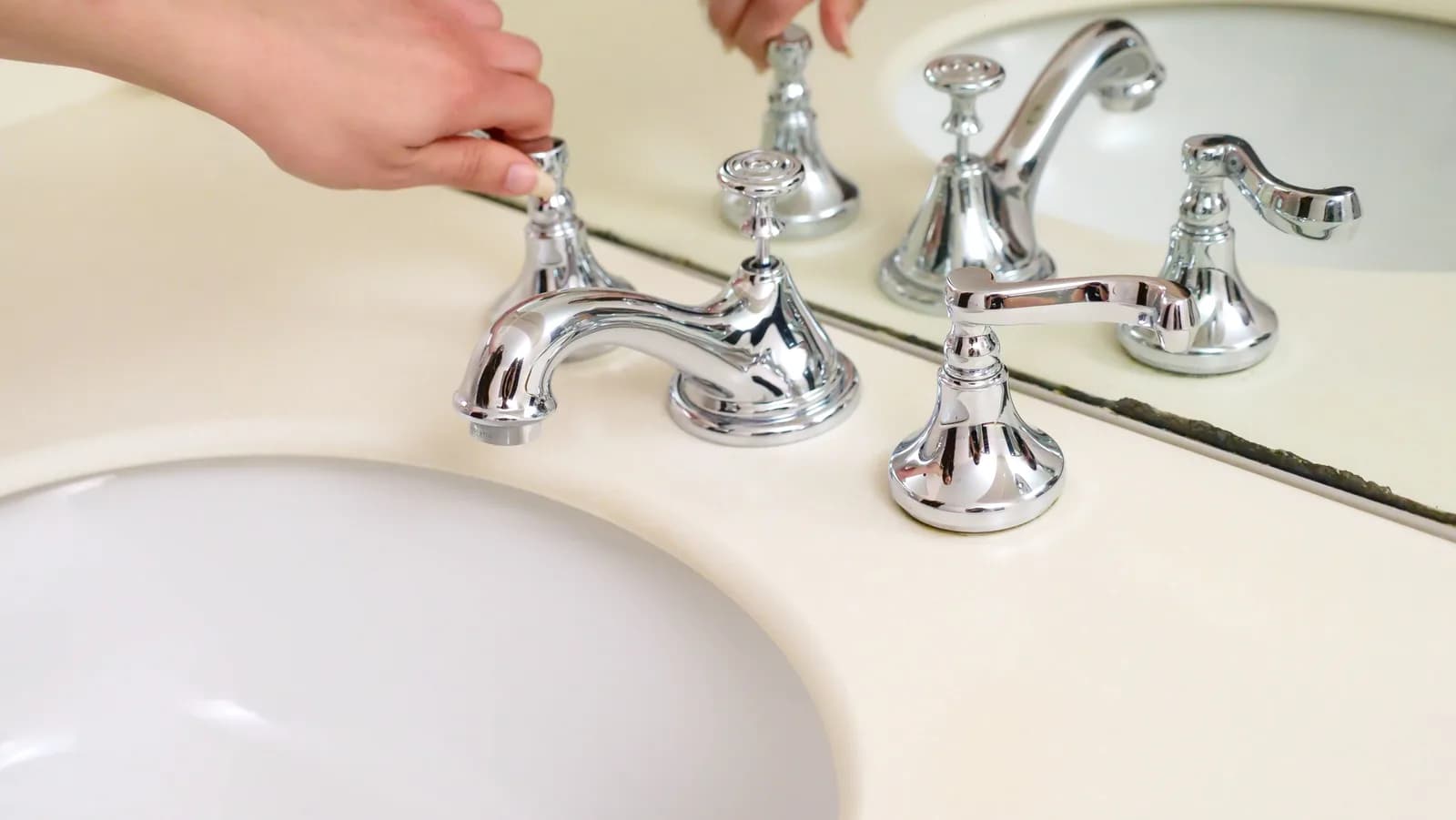
Need a new fixture installed? We handle faucet, toilet, garbage disposal, and fixture installations with precision. If your project also involves a water heater replacement, we can coordinate both services in a single visit. We make sure everything is properly connected, tested, and leak-free before we leave.
We also handle more involved plumbing projects including pipe repairs, water line work, and fixture rough-ins for bathroom and kitchen remodels. Whatever the scope, we communicate clearly about what is needed and what it will cost before starting any work.
Our Approach
We treat your home like our own. That means clean work areas, honest pricing, and repairs that actually last. No band-aid fixes, no hidden charges.
Residential Plumbing Services
Equipment We Work On
Serving Augusta & Brunswick
Plumbing in Maine Homes: Pipes, Wells, and Lead Service Lines
The pipes behind your walls tell you a lot about what to expect from your plumbing. A house built in 1955 almost certainly has different pipe than one built in 2005, and the material affects how long it lasts, what kind of problems show up, and whether a spot repair or a full replacement makes more sense.
This guide covers what pipe materials were common in different eras of Maine home construction, what private well owners in Maine should test for, and the basics of lead service lines. None of it replaces an inspection of your specific plumbing, but it should help you understand what a plumber is looking at and why.
Pipe Materials by Era: What Is Behind Your Walls
Plumbing materials changed several times over the past century, driven by cost, code changes, and lessons learned from failures. Knowing roughly when your home was built, or when it was last replumbed, narrows down what you likely have.
Homes built before the 1960s often mix materials: galvanized steel for supply lines, cast iron for drains, and in some older homes, a lead gooseneck connecting the house to the street main. Homes from the late 1970s through the 1990s sometimes have polybutylene, a plastic pipe that was popular for a while before it developed a reputation for failing. Most homes built or replumbed since the 2000s use copper, CPVC, or PEX.
| Material | Common era | Typical lifespan | Known issues |
|---|---|---|---|
| Lead | Pre-1950s (mainly service lines and older solder joints) | Can last physically for a century, but never safe to leave carrying drinking water | Leaches into water, especially when water sits in the pipe or is acidic; banned from new use in U.S. plumbing since 1986 |
| Galvanized steel | 1880s-1960s | About 40-50 years | Rusts from the inside out and builds up scale that restricts flow and can flake into water |
| Cast iron (drain/waste/vent) | 1900s-1970s, still used in some new construction | Often several decades before internal corrosion becomes a problem | Internal corrosion narrows and roughens the pipe interior, which catches debris and causes clogs |
| Copper | 1960s-present | Commonly decades of service | Pinhole leaks from pitting, most often with acidic water, leftover soldering flux, or stray electrical current |
| Polybutylene (Poly-B) | Roughly 1978-1997 | Failures reported anywhere from a few years to decades | Chlorine in treated water breaks down the pipe from the inside, especially at fittings; led to a $1 billion class-action settlement and is no longer accepted in U.S. plumbing codes |
| CPVC | 1980s-present | Manufacturer ratings commonly cite decades of service | Can become brittle with age or prolonged UV exposure; requires its own solvent cement, not standard PVC cement |
| PEX (A, B, or C) | 2000s-present | Manufacturer warranties commonly run 25 years | Degrades quickly in direct sunlight, sometimes within a month of exposure, and is vulnerable to rodents chewing through it |
If you are not sure what you have, look at an exposed run in the basement or utility area. Copper is reddish-orange, PEX is colored plastic (often red and blue), and CPVC is cream or tan plastic. Galvanized pipe is dull gray and threaded rather than soldered or glued.
Private Well or Public Water? What Maine Homeowners Should Test For
Maine has more private well users than most states, and well water is not tested or regulated unless the owner does it. Public water systems are tested regularly under state and federal rules, but the pipes between the street and your fixtures are your responsibility either way.
Maine CDC recommends well owners test annually for coliform bacteria, E. coli, and nitrate and nitrite, and every three to five years for a broader panel that includes arsenic, radon, uranium, fluoride, and several metals. Maine CDC estimates that about 1 in 10 wells in the state test high for arsenic, with elevated levels found in every part of Maine, not limited to one region or well type.
Radon in well water is evaluated separately from radon in indoor air. Maine CDC's guidance is to consider treatment starting around 4,000 picocuries per liter, with a stronger recommendation to treat as levels approach 10,000 picocuries per liter.
- Test annually: coliform bacteria, E. coli, nitrate and nitrite
- Test every 3-5 years: arsenic, radon, uranium, fluoride, and other metals
- Test any time: before a new baby arrives in the home, after a change in taste, smell, or color, after the well runs dry and recovers, or after buying a home
- Certified labs and test kits are listed at wellwater.maine.gov; Maine CDC's toxicology team offers free guidance on interpreting results
Well water that looks, smells, and tastes normal can still be high in arsenic or other contaminants. The only way to know is to test it.
Lead Service Lines: The Basics
A lead service line is the pipe connecting a house to the water main under the street; in some older homes, interior lead pipe or lead solder is also present. The EPA identifies homes built before 1986 as the highest-risk group, since that is when lead pipes, fittings, and solder were banned from new drinking water systems nationally.
There is no way to tell from your water alone whether lead is present; it has no color, taste, or smell at typical levels. The EPA's Protect Your Tap program walks homeowners through checking their service line, but confirming the material for certain usually means contacting your water utility or having a licensed plumber inspect the line where it enters the home.
According to the EPA, there is no known safe level of lead in a child's blood. Effects can include lowered IQ, behavior and learning problems, and slowed growth; pregnant women face added risk of reduced fetal growth. If you have reason to suspect a lead line, whether from an older home, a utility record, or a positive test, the EPA recommends using only cold water for drinking and cooking, running the tap briefly before use, and having the water tested by a certified lab.
Never use hot tap water for drinking, cooking, or making baby formula. Hot water dissolves lead more readily than cold.
Sources: Maine CDC - Private Well Water · Maine CDC - Have You Tested Your Well Water for Arsenic? · Maine CDC - Radon · EPA - Basic Information about Lead in Drinking Water · Wikipedia - Galvanized pipe · Wikipedia - Cast iron pipe · Wikipedia - Copper tubing · Wikipedia - Polybutylene · Wikipedia - Chlorinated polyvinyl chloride (CPVC) · Wikipedia - Cross-linked polyethylene (PEX)
Residential Plumbing FAQs
Do you charge for a plumbing estimate?
Call and we can walk through your project and pricing approach. Service calls for leaks, clogs, and repairs are quoted before work starts, so there are no surprises on the invoice.
How do I keep my pipes from freezing in cold weather?
Insulate any line that runs through an unheated basement, crawlspace, or exterior wall, keep the thermostat at 55°F or higher when away, and open cabinet doors under sinks on cold nights. If a pipe has already frozen, shut off the main and call — thawing it wrong is how pipes burst.
Do you work on older galvanized and cast-iron plumbing?
Yes. We regularly replace corroded galvanized supply lines with PEX or copper and repair cast-iron drains. We tell you when a spot repair is fine and when a section has reached the end of its life.
Can you fix low water pressure?
Usually. The cause ranges from a clogged aerator or failing pressure-reducing valve to mineral scale inside old galvanized pipe. We diagnose the cause first, since the fix varies widely depending on the source.
Do you handle plumbing emergencies?
Call us for a burst pipe, active leak, or sewage backup. Shut off your main water valve, then call (207) 902-8899. See our emergency plumbing page for what to do while you wait.
More Ways We Can Help
Google ReviewsServices
30Related services you may also need, such as…
Service Areas
9We serve Augusta, Brunswick, and towns throughout Kennebec & Cumberland County, including…
Company
5Learn more about how we work, starting with…
Get a Quote
Request Service
Fill out the form below to request an estimate or schedule service.
“*” indicates required fields
Need it today?Call (207) 902-8899